




Award win for revolutionary system
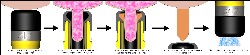
The Dairy Event 2005 saw the launch of a simple yet very effective patented teat dipping and liner disinfection system – the Automated Dipping and Flushing system (ADF) by Research Development and Innovations (RDI) Ltd. The company's stand had farmers queuing up to investigate the invention throughout the show, and its truly innovative and revolutionary nature was recognised by RABDF judges who presented it with the Prince Philip Award, a highly prestigious prize recognising excellence and value to the dairy farmer.
The ADF system addresses possibly the most significant economic condition affecting today's dairy farmers – mastitis – by automating the teat dipping and liner disinfection process. The system has been in operation on 10 UK dairy farms and dramatic improvements in cell counts and mastitis have been achieved. ADF is simple to install and suitable for all types of parlour.
"Everyone in the dairy industry knows that mastitis is responsible for major financial loss to dairy farmers. Recently published data states that direct costs (discarded milk, reduced milk yield, treatment) and indirect costs (increased risk of culling, loss of future milk yield) can combine to make the cost of a clinical case as high as £170*; subclinical cases can be even higher," says RDI's James Duke. "In addition to this, many mastitic cows will suffer from recurring infections, reducing future profits, increasing culling rates and risking future herd health."
"Countless studies have shown that cull rates due to mastitis are rising, herd sizes and yields are increasing and time spent on post-milking teat care is under pressure. It's no wonder mastitis pathogens can sometimes exploit this situation, resulting in devastating consequences. .
"The ADF system delivers efficient and effective post-milking disinfection of the teat and will assist in controlling the incidence of mastitis. Best practice states that each teat must be well covered with dip, and application must be carried out immediately after milking. Cross contamination is important for highly infectious bacteria such as Staph. aureus, and failing to thoroughly cleanse liners between cows provides them with the ideal opportunity to infect cow after cow. Automating this with the ADF system is logical and effective, as on-farm trials have shown," Mr Duke claims.
"Cutting corners with post-milk teat care simply means you are risking cow health, wasting money, time and effort," he adds.
How does the system work**?
The ADF system is triggered by the ACR or milk meter at the end of milking. A measured amount of teat dip is dispensed into the head of each liner on removal of the teat cups.
As the cluster is removed, the dip evenly coats the teat whilst both the skin pores and the teat canal are still open and receptive to disinfectant and emollients. Maximum protection is possible as the teat is not exposed to the environment prior to dipping.
Following cluster removal, the inside of the liner is disinfected and flushed clean. The liners are now fresh and ready to milk the next cow, eliminating cross contamination between cows.
"The result is complete, consistent post dipping, and a sanitised liner for every teat, for each and every cow, at every milking," Mr Duke explains.
ADF-dipped teats have shown improved teat end scores, and dramatically lower mastitis incidence levels, and when used over time it would appear that hyperkeratosis is also reduced.
"There is such as wide range of costs associated with milking and cow health and hygiene. They can include direct costs like vet and medication spend, indirect costs such as the additional time taken to treat a mastitic group and the effect of an overly high culling rate on the herd's genetic gain and performance. Accurately calculating these costs for your herd can be complex, but having looked at this for those commercial dairy farms with installations of the ADF system we know that it system can dramatically reduce costs and increase profitability," concludes James Duke.




