




Backward beet needs time to bulk

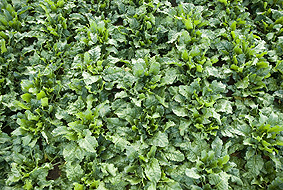
Don’t abandon backward sugar beet crops too quickly this autumn, as there is still plenty of time to bulk up with yield and root sugar content if the crop can be kept green and disease free through to November or December lifting, reports independent sugar beet agronomist, Richard Palmer of Farm Vision.
Most crops that have suffered from drought stress through the early part of the season should still be treated with a two-spray fungicide strategy, especially where they are being left to bulk up for longer, he advises. Mr Palmer (above) reports most of the irrigated or heavier land crops destined for early lifting have received a single spray Spyrale treatment and are showing good potential.
"Those crops for lifting from mid-October onwards would have had a reduced 0.75 l/ha rate at the end of July, with a second Spyrale treatment at 0.75 l/ha scheduled for the end of August," he says. "Experience last year showed just how much extra sugar yield beet can put on during an open autumn, which growers will be endeavouring to repeat this season."
Mr Palmer highlights that if growers are busy combining when August weather turns favourable - as may be the case with the disrupted harvest in the eastern counties so far this season - the Spyrale harvest interval of just four weeks gives greater flexibility in the second application timing, especially if the disease pressure remains relatively light.
Independent trials have shown a Spyrale two-spray programme, at four week interval in July and August, delivered 105 t/ha adjusted yield and a margin over input costs of £340/ha, compared to 96 t/ha and a margin of £185 from a single July application. Two spray programmes have also resulted in significant reductions in Amino N and sodium impurities, compared to a single spray or untreated crops.
The dry weather in May and June has created some unusual effects in checking crop growth that requires managing this autumn, reports Mr Palmer. Damage from Beet Cyst Nematodes has been noticeably greater on crops that were slow to get away, whilst nutrient uptake has also been adversely affected and left many crops looking yellow. "Tissue leaf analysis may highlight any micro-nutrient deficiencies, such as boron, magnesium or manganese, that could be corrected in tank-mix with the fungicide treatment," he advocates. But Mr Palmer advises caution when considering foliar N feeds at this late stage, which may affect Amino Acid levels in the roots.
Growers that may be looking to push back their sugar beet lifting programme, to give the crop extra time for bulking, will also need to negotiate early with their hauliers to reschedule deliveries, he adds. And prioritise which fields will be lifted when to meet factory intake bookings.




