




Cage ban will not lead to increase in salmonella
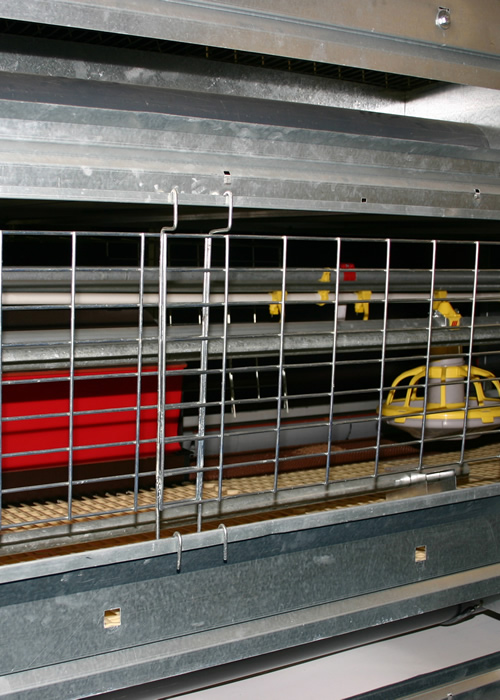
Scientists who have been studying the impact of different egg production systems on the incidence of salmonella say that the move away from conventional cage production to free range and other systems should not lead to an increase in salmonella.
Animal health scientists in five different countries combined to carry out the study, which has taken 18 months to complete. The research was carried out between the spring of 2007 and the autumn of 2008. The work was commissioned by the European Union, which is imposing a ban on producing eggs in conventional cages in January 2012. The EU wanted the scientists to examine whether the fears of some people that a switch from conventional cages to alternative forms of production would lead to an increase in salmonella were justified. The results of the scientists’ work have now been published, and they should allay any fears that the cage ban could lead to increased salmonella problems.
"There was a fear that if hens had too much contact with each other there would be a rise in salmonella incidence in the alternative systems. That is why I was specifically researching the influence of the housing systems. The main conclusion was that the alternative systems did not lead to any higher incidence of salmonella compared to the conventional battery cages. In fact, based on our studies, you could say that the alternative systems were better than the battery cages," said Sebastiaan Van Hoorebeke, who was one of the scientists involved in the study.
Sebastiaan is based at Ghent University in Belgium. Working with him in Ghent were Jantina De Vylder, Frank Pasmans, Richard Ducatelle, Freddy Haesebrouck, Jeroen Dewulf and Filip Van Immerseel. The departments at the university involved in the research were the Veterinary Epidemiology Unit, the Department of Reproduction, Obstetrics and Herd Health, the Faculty of Veterinary Medicine, the Department of Pathology, Bacteriology and Avian Diseases and the Faculty of Veterinary Medicine. They were joined in the work by the Institute for Animal Hygiene, Animal Welfare and Farm Animal Behaviour at the University of Veterinary Medicine in Hanover, Germany; the Veterinary Public Health Institute, Vetsuisse Faculty at the University of Bern, Switzerland; the Public Health and Risk Analysis Department, Istituto Zooprofilattico Sperimentale delle Venezie in Italy and the Department of Anatomy & Physiology of Farm Animals, Faculty of Animal Science and Hydrobiology, at the Agricultural University of Athens in Greece. The report was completed at the end of 2009.
Sebastiaan Van Hoorebeke said that in terms of salmonella incidence there was nothing to choose between each of the various alternatives to conventional cages, but hens in all of the alternatives achieved better results than birds in battery cages. "We couldn’t see any difference between the floor raised (barn), aviaries, free range or organic, but comparing all those alternative systems to conventional battery cages then there certainly was a risk of salmonella to house them in battery cages compared to the alternative systems. The worst ones to have salmonella were the conventional battery cages," he said. "So the hypothesis was the fear that there would be more salmonella in non-cage systems. Was that correct or not? We say, based on the results of our study, that there is no reason to conclude that the fear of more salmonella is justified. We couldn’t see it. There are not more problems with zoonotic pathogens like salmonella in the alternative systems compared to the battery cages."
The study was conducted on units in five different European countries. The countries were Belgium, Germany, Greece, Italy and Switzerland. "Switzerland was a bit of an outlier because they have not had battery cages since 1992, but we chose countries where we had good relations with the institutions," said Sebastiaan.
A total of 292 laying hen farms were sampled in the month prior to depopulation. An on-farm questionnaire was used to collect information on general management practices and specific characteristics of the sampled flock. During the study all of the birds were orally inoculated with salmonella enteritidis at 18 weeks of age. Shedding and colonisation were measured at regular time points.
Twenty-nine flocks were found positive for at least one salmonella serotype. In these flocks, the within flock prevalence of shedding hens, determined by individual sampling of 40 hens, varied between zero per cent and 27.50 per cent. A wide variety of serotypes was isolated, with salmonella enteritidis being the most common. Housing in conventional battery cages, the absence of dry cleaning in between production rounds and sampling in winter turned out to be risk factors for the shedding of salmonella enteritidis or typhimurium.
Sebastiaan Van Hoorebeke said scientists involved in the research were not surprised by the results because of the results of previous work some years earlier. "If you look at a base line study from 2004/2005, then we have already seen that housing in battery cages was a risk factor and that alternative systems were better. That is for salmonella. Mortality was higher in the alternative systems than in conventional cages in our study. On the issue of anti-microbial resistance, we didn’t see much better results in the alternative results compared to battery cages, but purely focusing on salmonella we can say that battery cages are worse than alternative systems, although there are extra factors that need to be taken into account. For example we see that more and more animal diseases or laying hen diseases occur in the alternative systems compared to the battery cages, so the farmer could use more often and a larger amount of anti-microbials in alternative systems. That is a discussion that is now going on."
On the central issue that he and his colleagues were asked to give an opinion he said the results were clear – alternative systems of production were better than conventional cages on salmonella incidence. "They come out better. There is no doubt about it. We checked it. When you look into the statistics in detail, the alternative systems are better than the conventional cages."
The ban on the use of conventional cages for layers is due to come into force on January 1 2012. Many in the industry believe that a number of other EU countries will fail to meet the deadline, although politicians are currently insisting that the ban will go ahead as planned. The UK Government has warned that any flock that is to complete a full cycle will have to be in place towards the end of this year. It says that conventional cage flocks in place when the ban comes in to force will not be allowed to continue.




