




Cost-effective mildew control required
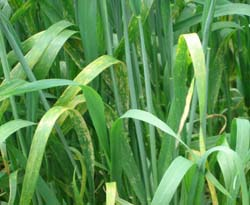
Although the dry and warm weather is keeping most disease levels low, mildew is the one foliar disease to look out for as it flourishes in such conditions. Growers are advised to check their cereal crops for mildew and add in some Fortress at T1 or indeed T2 timing, says Dow AgroSciences.
"When temperatures rise as they have done this spring, mildew starts to grow and release spores. The disease develops most rapidly when temperatures are around 15C, but can do so between 13C and 24C. Powdery mildew also flourishes when the relative humidity is around 95%, so dense crop canopies and muggy early morning conditions, as we have been experiencing, will also favour its development. Too much free water on the leaf surface reduces spore release and germination. Growers should be monitoring temperatures and inspecting their crops, particularly those varieties which are susceptible to mildew, such as Solstice, Claire, Brompton, Humber, Istabraq and Richmond," explains Liz Tomkinson, Fungicide Specialist for Dow AgroSciences.
"T1 sprays are being applied and Fortress can easily be mixed with other fungicides targeted at brown rust or Septoria. In fact one of its strengths is its ability to mix widely with no risk of any crop safety issues. The addition of 0.1 litre/ha of Fortress will cost just between £5 and £6/ha. Bearing in mind that mildew can reduce yields by 40% in susceptible varieties and losses of 10-15% are common, this is a small investment for peace of mind," points out Ms. Tomkinson.
Liz Tomkinson points out that Fortress will protect leaves from infection for up to six weeks, depending on the dose rate used.
Fortress gives a high return on investment, as it is one of the most cost-effective mildewicides on the market. "Some of this is down to dose rate reductions. The average dose rate of Fortress last year was just 0.1 l/ha, whereas ten years ago it was 0.152 l/ha. But at its average dose rates, Fortress costs up to 30% less than other current standards. So if the conditions continue as they are, growers should be thinking about topping up the protection defences against mildew ahead of any outbreak and protecting their wheat, barley and oats by using Fortress - it is very effective, offers persistent and high levels of disease control, all at a low cost per hectare."
Fortress contains 500 g/litre quinoxyfen, formulated as a suspension concentrate. It is a systemic protectant fungicide giving protection against powdery mildew on new plant growth. It is recommended on all varieties of winter and spring wheat, barley, oats, rye, triticale, durum wheat and sugar beet. It has been accepted by the Brewing, Licensing and Retail Association for crops destined for processing. In cereals the average dose rate is between 0.1-0.2 l/ha. Dose rates are flexible according to the variety and length of persistence. Fortress should be applied in the spring at first signs of disease up until Growth Stage 49. It is rainfast in one hour and is packed in a 1 litre container.




