




Dairy farmers themselves say BVD vaccination pays off well
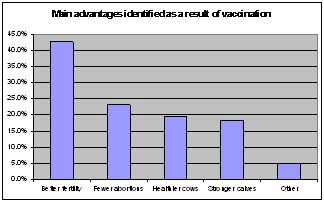
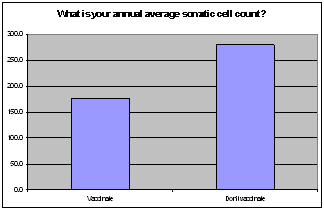
Dairy farmers, by their own reckoning, are £36/cow/year better off from BVD vaccination. In descending frequency, they cite better fertility, fewer abortions, healthier cows and stronger calves as the main advantages (see Figure 1). Vaccinated herds reported a somatic cell count 110,000 cells/ml lower than unvaccinated herds (see Figure 2).
These key findings are from a large scale survey of dairy farmers sponsored by the Pfizer vaccine Pregsure, though importantly the sponsorship was not declared to participants until now.
The financial gain declared by farmers is moderately higher than the £28/cow/year published in 2000 from an MDC/SAC report[i][1], according to Pfizer's senior livestock vet Carolyn Hogan. "From either of these sources, it's clear that vaccinating against BVD makes a profit," she says. "But unfortunately for UK-wide cattle health, it is estimated that currently over two-thirds of breeding animals are in unvaccinated herds. These farmers are missing out."
Of three BVD vaccines available in the UK, the survey sponsor is one of two with a claim for improved fertility on the official data-sheet governing their prescription by vets and use by farmers.
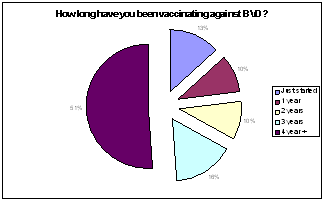
Among vaccinated herds in this survey, half have been vaccinating for four years or more, 16% for three years, 10% each for two years and one, and 13% have started recently (see Figure 3). Ms Hogan interprets this as a steady year-on-year flow of previously unprotected herds taking up vaccination. However, at this rate she calculates it would be at least 17 years before vaccination was universal[ii][2].
In non-vaccinating herds, 32% of farmers said they would welcome the opportunity now to discuss BVD with their vet, and another 52% said maybe they would (see Figure 4). Eliminating BVD from a herd requires four main components, according to Carolyn Hogan.
"The first and most important is the involvement of the farm's own vet to advise on and monitor the whole process," she says. "The other three are to identify and remove any persistently infected animals; to maintain good bio-security against re-infection from neighbouring herds and bought-in animals, and to undertake a vaccination programme including the essential use of booster doses as specified on the vaccine data sheet..
"The disease shows itself in a number of ways, some of them difficult to spot or link definitively to BVD," she adds. "Some calves born persistently infected will be stunted, but others can appear normal. In extreme cases, persistently infected animals will die of mucosal disease. Cows infected during pregnancy may abort or bear calves with cataracts or other abnormalities.
"In addition to all the specific symptoms though, probably the most damaging economically is the way BVD impairs the immune system. This can impact on calf diseases, notably scour and pneumonia. In adult cows, it can affect somatic cell counts and fertility."




