




Defra statistics indicate healthier trends in food purchases
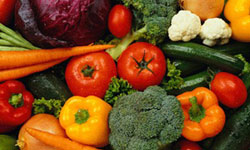
People in the UK are buying more and more fruit and vegetables
2005-06 saw the largest increase in purchases in the last twenty years, as shown by results from the Expenditure and Food Survey published today.
The results also show that people are buying less confectionary, and soft drinks and indicate a decline in purchases of alcoholic drinks both for the household and in pubs and restaurants.
Household expenditure rose for cheese, eggs and milk, with a continuing switch from whole milk to semi skimmed milk. There was also an increase in intake of fibre.
Jeff Rooker, Minister for Sustainable Food and Farming said: "These are national statistics produced to high professional standards and are an important addition to the evidence base on diet.
"These healthier trends in food purchases are promising, but we cannot be complacent, and must continue to encourage these trends, through healthy eating initiatives, like the 5 A DAY programme.
"Consumers must remember that the food choices they make can have a big difference not only to their health, but to their environment, and our countryside"
This is the first release of estimates based on food and drink purchases recorded in the Survey for the twelve month period from 1st April 2005 to 31st March 2006.
Comparing 2005-06 with the previous year:
* Quantities of fruit and vegetables, excluding potatoes, purchased for the household were 7.7 per cent higher in 2005-06, continuing an increasing trend.
* Household expenditure rose by 12.9 per cent for fruit and by 6.3 per cent for vegetables, excluding potatoes.
* Quantities of confectionary purchased for the household fell by 6.1 per cent in 2005-06, following small rises in recent years.
* Household expenditure fell by 7.7 per cent for confectionery and by 5.7 per cent for soft drinks.
* Since last year household and eating out consumption of alcoholic drink has dropped by 3.1 per cent
* Households are continuing to switch from whole milk to semi skimmed
milk. Quantities of purchases of whole milk decreased by 3.8 per
cent in 2005-06 whilst those of semi-skimmed milk increased by 3.3 per cent.
* Estimated average intake of vitamin C rose by 6.8 per cent, in keeping with the rise in purchases of fruit and vegetables.
* Fat intake, measured by its percentage contribution to food energy intake, dropped very slightly to 38.1 per cent. The energy contribution from saturated fatty acids dropped to 14.6 per cent.
* There was a small rise in sodium intake in 2005-06 of 0.6 per cent. The 0.6 per cent rise in sodium is small and may not be statistically significant. Due to the way the results are processed it is not possible to say whether this change is likely to be due to sampling errors.
* Estimated intake of fibre was 3.4 per cent higher.
* Household expenditure rose by 5.3 per cent for fish, 5.1 per cent for cheese, 5.0 per cent for eggs and 4.9 per cent for milk.
* Total expenditure on all food and drink rose by 1.7 per cent to £34.97 per person per week.
* Expenditure on total household food and drink rose by 2.2 per cent to £23.56 per person per week.
* Estimates for 2001-02 to 2004-05 have been revised to incorporate free food and unspecified meals which equate to roughly an additional 100 Kcals per person per day. Almost all of the effect is on eating out.




