




Emergency summit urged for illegal EU pig meat
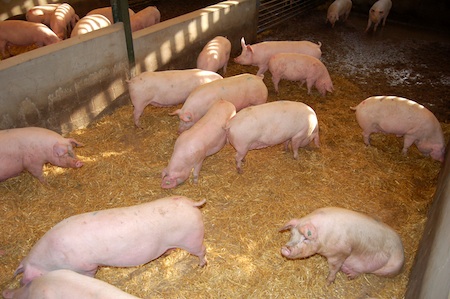
A call for an emergency summit meeting to prevent the importation of pig meat from illegal production systems in Europe from 1st January 2013 has been made by Matthew Curtis of pig-breeding company ACMC.
Around 40,000 illegal pigs an hour will be entering the European food chain in January and bacon, ham and pizzas containing their meat will be destined for Britain’s supermarkets, according to the National Pig Association.
Although, on welfare grounds, the EU has banned the use of stalls for sows throughout most of their pregnancy from the beginning of the New Year most European countries are not yet compliant.
Stalls have not been used in the United Kingdom for many years, but figures released by Brussels this month show that with the continental ban only days away, 80% of European Union countries have not yet complied with the ban.

"Figures from the National Pig Association suggest that nearly 5 million sows will be kept under illegal production systems" said Curtis.
"They will produce roughly 96 million pigs - about 1.8 million a week. This is a staggering amount - equivalent to the entire production from Germany and Spain - the EU’s largest pig producers,"
"Imports of such meat will have serious implications for British pig farmers who follow high welfare practices and who have had to comply with a total ban on sow stalls for over a decade," he said.
"Due to cheaper production methods this lower-welfare meat could undercut UK-produced meat and the fiasco in the EU surrounding non-compliance with the battery-cage ban in 2012 will pale into insignificance compared with this."
Many are warning that they will go out of business with the industry facing high feed costs and a reduced output.
Even allowing for a last minute rush to remove sows from stalls and house them in new group pens, this indicates that nearly two million pigs a week from farms operating illegally will be delivered to Europe’s processing plants.
"It makes a mockery of Europe’s animal welfare legislation," says NPA chairman Richard Longthorp.
"As the United Kingdom imports around 60 percent of its pork — much of it as processed food such as ham and bacon — shoppers will need to be very careful about what they choose from supermarket shelves and when eating out in restaurants."
The association has urged British shoppers not to buy imported pork or processed pork products such as bacon, until all European Union member countries have complied with the ban.
The summit should involve all UK retailers, wholesalers, slaughter-processors, producers and consumer bodies to ensure that no pig meat from illegal production systems in the EU enters the UK, says Mr Curtis.
"There should be harsh penalties to ensure that retailers and wholesalers found to be importing this meat take responsibility for the consequences of their actions."
Any meat in UK shops and supermarkets from such illegal production systems would undermine the credibility of the brand image of the retailer, wholesaler and slaughter-processor and further damage the profitability of the British pig producers, who are already suffering a crisis situation," Curtis added.




