




Free range or cage free? Aussie stocking density debate continues
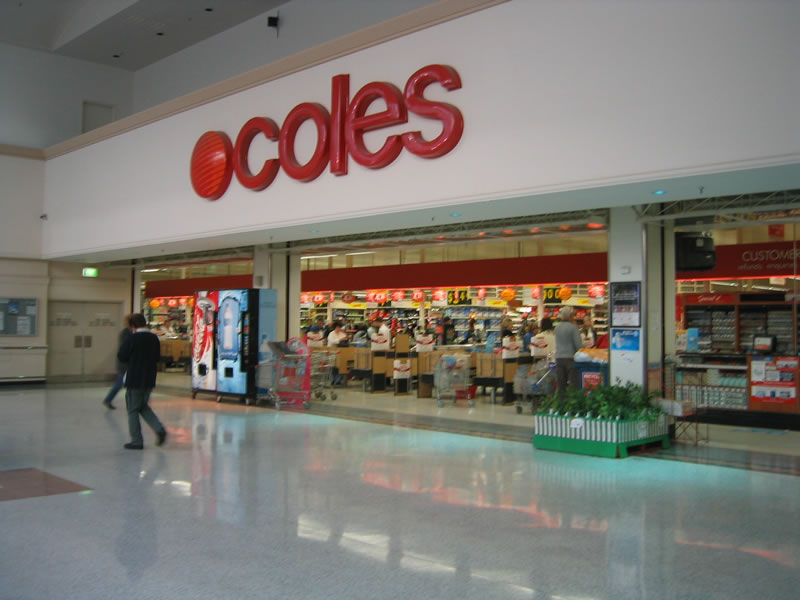
A leading Australian supermarket chain appears to be attempting to establish a free range stocking density of 10,000 birds per hectare after the Australian Egg Corporation (AECL) was thwarted in its attempt to introduce a 20,000-bird stocking rate.
The AECL’s plans collapsed when the Australian Competition and Consumer Commission (ACCC) indicated that it would reject its application for a trade mark for a new free range standard using a stocking rate of 20,000 birds per hectare - 10 times the 2,000 birds per hectare limit imposed on producers in the United Kingdom. The ACCC said it believed the AECL proposal may mislead consumers about the nature of eggs described as free range.
Free range producer Phil Westwood, who as president of the Free Range Egg and Poultry Association of Australia Inc and spokesman for the Free Range Farmers Association Inc was a leading figure in a campaign against the AECL’s plans, told the Ranger that he and other opponents had won “almost total victory against the AECL's intensive free range plans.” He said, “They withdrew their application for a trade mark for their Egg Standards Australia plan when the Australian Competition and Consumer
Commission comprehensively rejected their proposal.”
But he said that a leading supermarket group, Coles, was now trying to establish an outdoor stocking density standard of 10,000 hens per hectare. He said he had no problem with the stocking rate, as long as Coles did not seek to describe the eggs as free range. “We are comfortable as long as they call it cage free, which they have been doing in most of their promotional material,” he said. “But they keep making references to free range, which is definitely not acceptable to the industry,” said Phil.
There is some indication that calling the eggs free range may fall foul of the ACCC, just like the AECL plan. Although the ACCC has not commented directly on the Coles development, ACCC commissioner Sarah Court has said the watchdog believes that 10,000 hens per hectare is not consistent with consumers’ understanding of free range. She said the commission was very concerned "the egg industry was trying to redefine free range to increase their own profitability’’ without regard to consumers’ views. The ACCC was concerned about "the redefinition of what is meant by free range by industry to suit itself, and the fact that the redefinition has the very real potential of misleading consumers,’’ she said.
RSPCA Australia has also spoken out against Coles. Its farm animal scientific officer has said that 10,000 hens per hectare was a more appropriate standard for barn eggs than free range. She said she wanted to see evidence that hens would not be harmed in production systems that Coles would accept as free range.
Phil Westwood said the major problem was that in Australia there was no legal definition of what free range meant. “It sounds crazy, but politicians prefer self-regulation,” he said.
In Europe the European Union limits external stocking density for free range egg production to 2,500 birds per hectare. Until 2011 the limit in the United Kingdom was set at 1,000 birds per hectare under the Lion code. In 2011 the limit was increased to 2,000 birds per hectare – a stocking rate that was eventually agreed by the RSPCA after some debate.
In Australia the free range egg industry voluntary code limits free range egg producers to 1,500 hens per hectare. The Australian Egg Corporation’s proposal would have allowed more than ten times that number of birds to be kept on an acre of land, but the AECL withdrew its trade mark application following an indication from ACCC that it would reject the proposal.
Phil Westwood suspects that the AECL is now watching to see the response to the developments at the Coles supermarket chain. “Many in the egg industry now believe that the AECL is waiting to see any consumer and ACCC response to }}
the ‘free range' standards currently being introduced by Coles for its egg suppliers,” he said. “That standard purports to allow a stocking density of 10,000 hens per hectare but it has already been acknowledged by AECL that many 'free range' farms have stocking densities of around 40,000 hens per hectare. Some of those farms are accredited by the Egg Corp Assured program – which we understand is accepted by Coles as a recognised accreditation body for meeting its requirements,” said Phil.
“We hope that the ACCC will seriously look at taking action against some of the farms which appear to be blatantly ignoring consumer perceptions of the meaning of the term free range. Some farms, such as those supplying EcoEggs, openly acknowledge on their web site that they run stocking densities of four hens per square metre (40,000 hens per hectare).”
Free range is, apparently, the fastest growing egg sector in Australia. Some 43 million dozen free range eggs are sold in supermarkets each year, accounting for a third of the market, although AECL figures indicate that 29 per cent of all free range eggs produced, including those sold to restaurants and other food services, were produced at farms with stocking densities of at least 20,000 hens per hectare in 2010.
Phil Westwood says that what is needed is more clarity so that Australian consumers know exactly what they are buying when they go shopping for eggs. He described the current position as a “fiasco” and said it was the result of Government failure that “demonstrated that 'truth in labeling' legislation must be a high priority.” He said, “We also hope that the ACCC will launch some prosecutions against egg producers who have been scamming their customers for years. The end game for Coles is easy. Simply call their high density system 'cage free' as they state in their advertising. Don't try to con consumers that this is 'free range'.”
Coles has said that its stocking density was far better than most of Australia's free range egg production, which typically came from farms running at double or even triple the stocking density that was allowed by Coles.




