




Milions of UK Solar Construction projects put at risk by EU levy
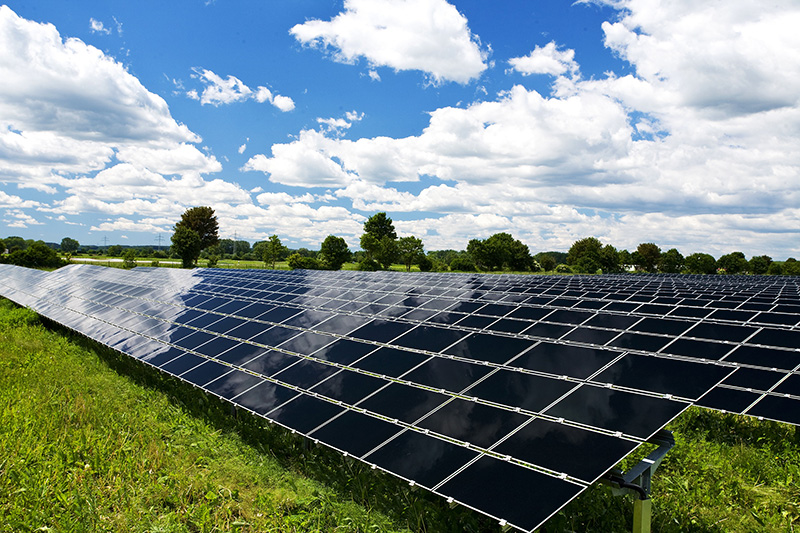
Solar companies are reporting that millions of pounds worth of UK projects are being put at risk due to an EU trade levy of between 40% & 70% which it is proposed be added to the import price of Chinese solar products. “We’re tremendously disappointed to hear this proposed news”, declared Nick Pascoe, Managing Director of Orta Solar, who has said up to £180 million of UK solar construction projects they have planned could be put at risk. “We invest many millions of pounds in surveying, planning, legal, financial and technical design work typically twelve months prior to constructing these projects and as of today we no longer know whether it will be economically viable to construct UK commercial scale Solar farms later in 2013 and beyond. How can we possibly continue to invest?”
“We’re astonished that the EU has bought into the protectionist argument of 42 largely bankrupt EU based Solar wafer & cell manufacturers at the expense of thousands of EU based Solar development and installation businesses who depend on easy availability of low cost solar panels for their existence. Any certainty we had on future construction costs has just been removed with the stroke of a pen. We’re writing to & speaking with all of our clients, suppliers and partners explaining the impact of the proposed EU levy, suggesting how they can help fight it through www.afase.org or lobbying the UK’s Dept. of Energy & Climate Change and explaining what we’re doing to help keep their projects on track. I’m an advocate of EU harmonisation to bring down trade barriers. This misguided EU proposal will likely impact British jobs and should be opposed strongly by David Cameron’s Govt.”, Pascoe commented. Avenues being explored to keep projects economically viable include striking supply deals with EU cell & panel manufacturers [but at current Chinese level pricing] or switching supply to panels not containing Chinese manufactured cells, however both options are very limited.
The facts in the UK speak for themselves where there are approximately 500 people working in manufacturing solar panels and approximately 25,000 directly employed installing the panels and developing larger scale projects. Ironically, 400 of those in manufacturing are based in Sharp’s Wrexham plant which imports Chinese Solar wafers and exports most of it’s manufactured Solar Panels to Japan. It may now face steep cost price rises whilst it’s sales price remains static. Within the EU the picture is similar, particularly in Germany where 6,000 are directly employed manufacturing Solar wafers & cells, whereas 150,000 are employed installing and developing large projects. “Throughout Europe, the Solar Sector has become a largely value adding industry enabled by availability of low cost Solar panels and limited by sensitive Govt subsidised economics that allow for minimal margins and carefully selected projects”, Pascoe said. “It does not take much imagination to see what will happen to the installation & commercial development sector if cost prices are hiked upwards whilst the revenues remain fixed. The EU is shutting the stable door, but the horse bolted some time ago and we’ve mostly now got over it.”
One of the major infrastructural challenges facing EU manufacturers of photovoltaic silicon wafers & cells is that none of the big EU companies with the financial muscle to invest the £10Bns required to develop low cost manufacturing facilities in the EU (BP Solar or Bosch for example) chose to do so. It may be fact that China supported the growth of its Solar cell manufacturing base ($45Bn quoted in Reuters) whereas the EU Govt. did not, but inevitably Chinese manufacturers are now in pole position when it comes to lowest priced products and EU manufacturers have lost out. That is now history, is there any sense at all in trying to re-write the legacy of EU cell manufacturing under-investment by impacting the much larger & healthy EU based value adding Solar sector addicted to the easy availability of low cost product?




