




Pig producers warn over EU stall ban
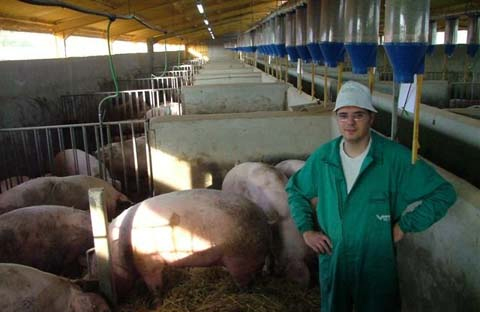
An EU wide ban on gestation-sow stalls set to become law in the New Year is making hog producers worried about pork prices and the cost of production.
Many are warning that they will go out of business with the industry facing high feed costs and a reduced output.
In the United States, the government introduced a pork-buying programme in a bid to keep its pig farmers in business. And the Chinese government is putting pork into cold storage, as a buffer against shortages and high prices next year.
Pig industry leaders from across the European Union met in London in September to explore ways to ensure pork remains the world’s most affordable red meat.
They reported that pig herds are being sold because prices are not rising fast enough in supermarkets to cover the cost of record-high pig-feed costs.
"It usually takes at least six months for higher production costs to filter through to shop prices — but pig farmers simply haven't got that long," said National Pig Association chairman Richard Longthorp, who farms outdoor pigs in Yorkshire.
"Some have got only a few weeks left before they run out of credit at the bank and have to sell up, and this is happening all over Europe."
New data shows the European Union pig herd is declining at a significant rate, and this is a trend that is being mirrored around the world. Pig farmers have been plunged into loss by high pig-feed costs, caused by the global failure of maize and soya harvests.
All main European pig-producing countries report shrinking sow herds. Falling numbers in the 12 months to June 2012 have been reported this week by Denmark (-2.3), Germany (-1.3), Ireland (-6.6), Spain (-2.8), France (-3.2), Italy (-13), Hungary (-5), the Netherlands (-3.6), Austria (-2.8), Poland (-9.6) and Sweden (-7.2).
But the move to group-sow housing — following Europe’s partial ban on sow stalls in January — doesn’t have to mean a drop in herd productivity.
This is the message being given to pig farmers attending the EuroTier livestock exhibition in Hannover, Germany, by international pig-breeding company ACMC.
“Much depends upon the temperament of the sows. Sows with aggressive natures can cause problems, causing a reduction in numbers born and reared. But sows with a docile temperament tend to perform better in group situations,” said ACMC’s managing director Matthew Curtis.
“The importance of temperament is now being recognised by researchers across the world where the role of temperament is being investigated at several centres,” he added. In Canada, for instance, researchers are looking into selecting lines that are less aggressive and suited to group-housing systems.
“Our own experience has shown that docile sows can perform as well, if not better, than confined sows, even on a large scale.” A 1000-sow herd using ACMC’s AC1 gilts belonging to the Taroncher brothers — who farm near Valencia in Spain — is weaning 32.5 pigs per sow per year on a farm which is already compliant with the new regulations.
Tesco has announced it is to launch direct contracts with beef and pork farmers in a £25 million annual deal with better prices.
The changes will mean Tesco will now source its beef and pork for specialised lines from dedicated farmer supplies, which will help them provide a more consistent product for customers.
In return, farmers freely entering into a contract to supply Tesco will benefit from clear pricing commitments linked to cost of production for pork and a market premium for beef.
Tesco's own brand pork will be supplied by up to 140 pig farmers whose prices for meat will be reviewed monthly.
A similar contract will be given to beef farmers, 1,000 of whom will supply their meat for Tesco's own brand.
The news comes after pig farmers accused Tesco of 'grossly underpaying' UK suppliers of meat back in July.




