




Schmallenberg disease confirmed in Dumfriesshire
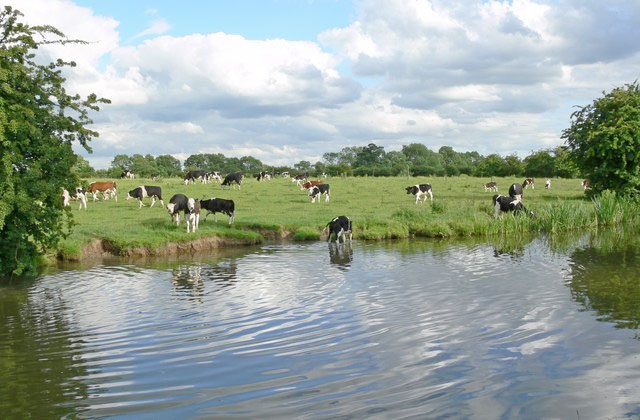
The first confirmed case of the Schmallenberg disease has been identified on a Dumfriesshire farm after birth defects were found in a calf.
Spread by midges, the virus was first identified on German and Dutch farms in 2011 and spread throughout parts of Europe and southern England.
Previous surveillance in Scotland identified animals carrying antibodies to SBV but these had been brought into the country from at risk areas. The recent discovery of positive animals in a closed dairy herd in Dumfries and Galloway confirmed the widely held expectation that the virus has spread to Scotland and is likely to start to circulate widely in 2013.
The calf, born to a suckler herd, was consistent with the pathology of the disease and tests carried out by SAC Consulting: Veterinary Services (a Division of Scotland’s Rural College) and the Moredun Research Institute have confirmed the presence of the virus.
The Schmallenberg virus is related to a known virus called Akabane, which is spread by midges and which classically causes brain defects and foetal malformations, particularly deformities of the limbs.
It was first detected near Schmallenberg in Germany in 2011 but subsequently spread into other parts of Europe and was first reported in the south of England early in 2012.
Since then there have been outbreaks amongst lambing flocks and calving herds in other parts of England and Wales. The effects can be variable with some farms suffering high lamb or calf mortality while other herds or flocks suffer few effects.
It was recently reported that blood tests on eight dairy cows on SRUC’s Barony Campus outside Dumfries had tested positive for antibodies to SBV although there has been no evidence of any calving problems with that herd.
For Scotland’s Rural College, Brian Hosie, Head of SAC Veterinary Services, said: "The report of this recent calving in Dumfriesshire would indicate that SBV was spread by midges in the area during last autumn. We would urge farmers to be more alert than ever to potential problems amongst cattle or sheep and discuss any concerns with their veterinary surgeons."
Exposure to SBV can result in relatively mild conditions in cattle and sheep but where infection takes place during the early stages of pregnancy, it can result in congenital disorders of lambs and calves.
Infection may also be linked to poor breeding performance.
With the confirmation that the virus has arrived in Scotland, NFU Scotland is urging cattle and sheep producers to remain vigilant and discuss the implications for their stock with their vet.
Approval for a vaccine is believed to be imminent and farmers, in discussion with their vet, can look at breeding strategies that minimise the risk.
NFU Scotland President Nigel Miller said: "The confirmation that SBV has been active in South West Scotland is a disappointment but not a surprise and the disease now presents a genuine risk to Scottish cattle and sheep this year.
"The crucial thing now is for Scottish livestock farmers to speak to their vets and give serious consideration as to how they minimise any impact that the virus may have on their cattle and sheep.
"SBV is not a notifiable disease but experience in England and other parts of Europe has shown the devastating impact the disease can have on lambs and calves. It is of such importance to our members that we will co-ordinate the Scottish monitoring effort and will be working with SRUC and Biobest Laboratories to track the virus’ progress across Scotland.
"The impact of SBV in Scotland will depend on where the disease is, the temperature limits at which the disease can replicate within midges and how quickly it may spread - all questions that we currently cannot answer but the monitoring effort will help establish.
"It is unclear how the virus ability to over winter will be impacted by this prolonged spring freeze. On the present evidence the virus seems to be able to cope well with Northern Europe’s climate and one would therefore expect spring calving cows (at least in the Southern half of Scotland) to be challenged by the virus during the danger period of the breeding cycle. Risk is not just from the south; Schmallenberg is also present in Ireland and infected midges have the potential to move across to Western Scotland.
"It is expected that vaccination will be an option in the near future with emergency approval pending. That is going to be an option for cattle and sheep producers to consider when it comes to protecting stock. However, management changes – such as delaying the introduction of bulls and rams – can also minimise the impact of the disease on calves and lambs.
"These are the kinds of discussions that our farmers now need to urgently have with their vets."




