




UK livestock 'exposed' to Schmallenberg this summer
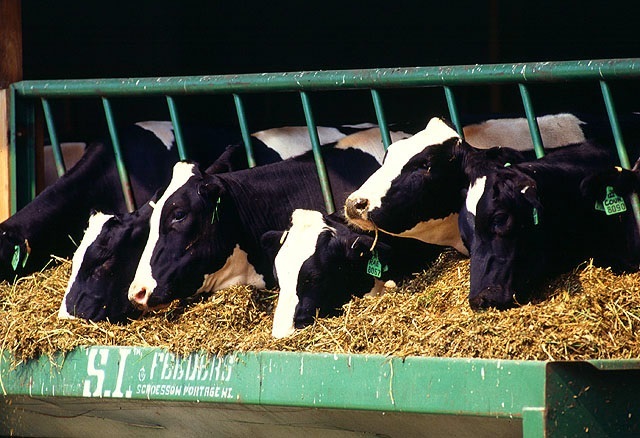
The National Farmers' Union have said they are writing to all its members urging them to assess if their livestock are at risk of contracting the Schmallenberg virus (SBV) this summer.
The letter points out that the availability of vaccine later this month gives farmers options for control; that farmers should be discussing Schmallenberg with their vets and that those with spring calving beef or dairy herds may be most at risk. With the vaccine only approved for non-pregnant animals, the fact that bulling is already underway in many spring calving herds means the option of vaccinating may have passed but veterinary advice could still be invaluable.
The Veterinary Medicines Directorate (VMD) issued the veterinary pharmaceutical company MSD Animal Health, a licence to provide the new 'Bovilis SBV' vaccine.
Commenting, Peter Jones, President of the BVA, said: "Given the serious worry that this new disease has caused and the significant losses that individual farmers have faced, the news that a vaccine is now available should be warmly welcomed.
"Although we are aware that previous exposure to the virus provides some immunity there remains a lot of uncertainty about how long the immunity will last and which animals in the herd or flock have been exposed.
"Farmers can now plan with good veterinary advice how, where and when to use the vaccine to protect their animals and their offspring."
NFU Scotland discussed the letter when it met with representatives of the British Veterinary Association (BVA) today ahead of the BVA’s annual Scottish dinner in Edinburgh. It also discussed SBV with vets in North East Scotland last week.
Spread by midges, SBV was first identified on German and Dutch farms in 2011 and has since spread throughout Europe with more than 1750 cases in the UK. Cases have been confirmed in Dumfries and Galloway and Aberdeenshire and there is the expectation that the virus will start to circulate more widely in Scotland in 2013. NFU Scotland, along with SRUC and Biobest, has a monitoring programme in place to help track the spread of SBV.
Exposure to SBV can result in relatively mild conditions in cattle and sheep but where infection takes place during the early stages of pregnancy (25-50 days in sheep, 70-120 days in cattle); it can result in congenital disorders of lambs and calves. Infection also causes a drop in milk production and may also be linked to poor breeding performance.
The availability of a vaccine means it may be possible to vaccinate sheep and cattle before they become pregnant and Scottish farmers should be discussing with their vets whether vaccination could help protect their stock.
NFU Scotland’s Animal Health Policy Manager, Penny Johnston said: "The ongoing low temperatures may prove to have had a limiting effect on further viral spread in recent months but an upturn in temperatures could very quickly change that picture. That is where our surveillance is crucial in mapping the speed at which the virus starts spread and its likely reach across Scotland.
"The virus could start to shift in the next few months and we continue to urge all livestock producers to discuss the implications for their stock with their vet."
NFU Scotland President and qualified vet, Nigel Miller said: “With large numbers of Scottish livestock likely to be exposed to the Schmallenberg virus for the first time this summer, it is a significant step forward that our farmers now have the choice to vaccinate and protect their animals.
“The vaccine against SBV is a tool that allows farmers, in discussion with their vets, to proactively manage their animals against exposure to the virus. Spring calving herds could be most at risk as the effects of the disease are greatest if infection takes place during early pregnancy and midge and viral activity is likely to be highest over the coming months.
“Animals should be vaccinated ahead of breeding to provide protection during the vulnerable stage of early pregnancy. This requirement may limit vaccine use this year but it may still be an important tool for many livestock keepers in the months ahead.
“Previous strategies could only be based around breeding in times of low midge or virus activity. While it is easier for farmers to consider putting rams out later in the year, for most cattle farmers delayed breeding is not an option and, depending on disease risk, vaccination may be appropriate.
“The first results from our ongoing surveillance of dairy herds across Scotland suggest that the vast majority of our livestock remain naive to SBV. However, we know the virus can over-winter and with temperatures now rising, there is likely to be more activity in the coming months. We will continue to monitor our network of dairy herds across Scotland to track the spread of SBV to allow farmers and vets the chance to plan their strategies for dealing with the disease.”




