




Under-performing herds being over-faced with fibre
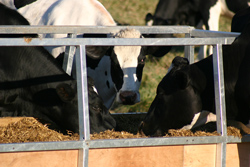
A number of under-performing dairy herds are losing up to five litres per cow per day due to a little-known restriction on feed intakes brought into play this year by silage made from mature grass, according to Adam Collantine, technical manager at HST Feeds.
"Everyone knows that cows have a maximum feed intake usually in the range 20 to 25 kilogrammes dry matter per day," he says. "But they also reach an intake limit at about 7.5 kilos of NDF (neutral detergent fibre). In the ration as a whole, you want no more than 34 to 35 per cent NDF content if cows are to reach their dry matter intake and fibre limits simultaneously."
In normal years, this isn't a major issue. However, Adam says most silages this year are more than 52 per cent NDF, with many above 55 per cent. In addition to this, many farmers may not have enough, particularly having used some already for buffer feeding. For some , he says the first resort for additional rumen fill is a moist by-product feed.
"But these are usually the residue remaining after the extraction of starch, oil or another high value component. A high proportion of this residue is therefore fibre. Brewers grains, for example, are an excellent feed for dairy cows in the right circumstances, but they have about 60 per cent NDF."
Especially for this winter's circumstances, HST has developed an ultra-low fibre, high energy dairy pellet called Efficiency Plus. It contains mainly wheat and soya. To keep the fibre level low, a number of commonplace raw materials are ruled out, including sugar beet pulp, palm kernel, wheatfeed, citrus pulp and soya hulls. Efficiency Plus is available at two protein levels, 22 and 24 per cent.
Due to over-mature grass silages, some dairy diets this winter are 40 per cent plus NDF overall, according to Adam Collantine, with an intake potential about three to four kilos dry matter per cow lower than an optimum 35 per cent NDF diet. "The impact of this on milk yield could be as much as eight litres per cow," he says.
Immediate bounce back from sudden milk drop
At Green Farm, Burland Green near Nantwich, Gareth Hunt saw milk yields drop suddenly by four litres per cow in late August as greater reliance was placed on silage made in the first week of June, some three weeks later than usual.
"As you'd expect, the silage has plenty of fibre and is well-fermented but low in protein," says Gareth. "Cows are eating it readily and it is good for rumen function, but it doesn't pack much of a punch."
By switching from an 18 per cent protein high energy cake to Efficiency Plus 24%, he says yields bounced back almost overnight by five to six litres per cow across the entire 130-cow herd, stale milkers and fresh calvers alike.




