




Variable returns highlight profit and loss for potatoes
Financial returns for UK potato growers have never been as variable as those experienced this season, according to industry consultant and agronomist, Denis Buckley.
With the difficult weather conditions he has seen some growers’ write-off whole fields, with losses of £3,000 a hectare or more. Growers with supply contracts at £100/t off the field and 40 t/ha yield would be likely to have generated losses of over £1,600/ha this year.
However, other growers have recorded good yields and prices of over £320/t on the free market – which could add up to extremely healthy margins of £12,000 a hectare on individual fields, claimed Mr Buckley.
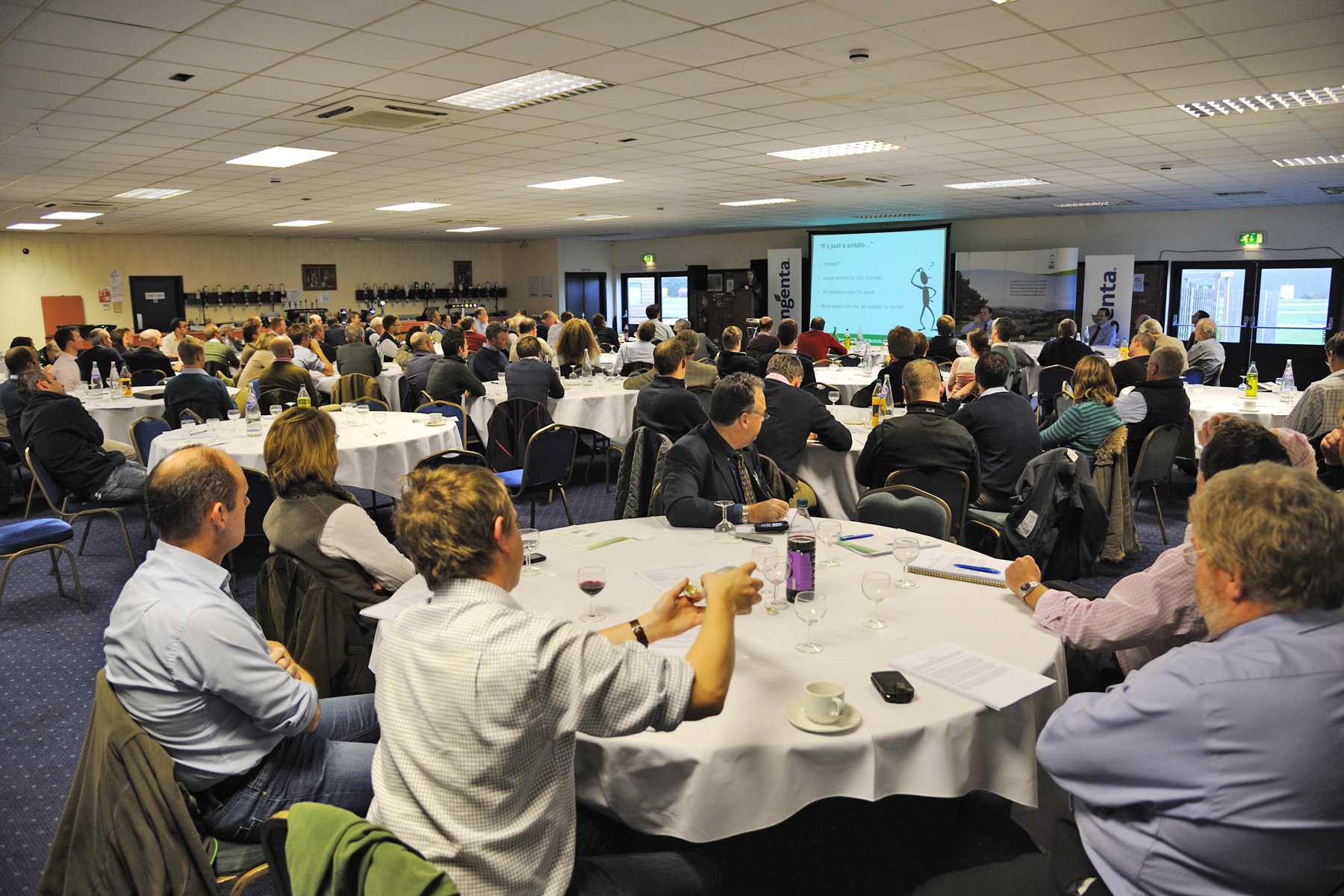
Speaking at the recent ADAS Syngenta Progressive Potato Farming Conference and Exhibition, he called for a £30/t increase in all contract potato prices for next season, which he believed would be reasonable to cover the risks of growing the crop and increased costs in the pipeline. He also argued that, in the light of the past season’s experiences, Force majeure should be enshrined in all contracts, along with the potential to build an element of market related pricing into contracts.
Bidwells agribusiness consultant, Neil Cameron, agreed that predicting next year’s potato crop area will be extremely difficult, given the contrast of current phenomenal free market prices against the bad experiences of the past season. He reported that when price spikes have been seen on previous occasions, they often quickly fell back when a larger area was planted in the subsequent year.
Options for 2013
For 2013 he believed there is capacity in the industry to increase planting, since 2012 was 5% down on previous seasons, and with autumn cereal sowing severely restricted by soil conditions there is land available.
However, against that are factors of cash availability, the fact there are now fewer specialist potato growers and the relative profitability of other crops, including oilseed rape and wheat, that can give margins equal or higher than potatoes, without the high risks of growing, he advised.
Reporting on potato growing figures as part of the annual Potato Council Cost of Production review, Mr Cameron said total costs for 2012 had increased by some 9% for most potato crops, including nearly £300/ha (13%) increase in variable costs. The problem for profitability was compounded by lower yields, which has a dramatic effect on production cost per tonne; “yield is the key factor in driving down the cost per tonne,” he added.
Mr Cameron did predict that growing costs would fall back slightly in 2013, expected largely due to lower fertiliser costs and a reduced fungicide requirement in a normal season. “However, there is a relentless rise in fuel and machinery costs, and we are forecasting significantly higher seed costs.”
Seed quality counts
David Firman of Cambridge University Farms reinforced that seed costs were likely to be an increasing element of overall growing costs for next season. For many growers, seed cost could rise above £1000 per hectare, or over 40% of total variable costs, he said.
And with seed such a fundamental input he urged growers to pay greater attention to the physical condition and the physiological state of the stocks they buy, in addition to pathogen infection. “Pathological, physical and physiological factors can all interact to influence the productivity and value of the daughter crop, through effects on yield, uniformity, appearance and suitability or market,” he said. “Seed physiology may be having a bigger impact on overall marketability of the crop.”
Mr Firman cited CUF trials showing that early produced seed typically gives rise to higher stem numbers and higher tuber numbers, which can in turn be used by growers to manipulate tuber size for optimum marketability.
He highlighted that growers must be especially aware of the impact of seed-borne Rhizoctonia on the incidence of Black Scurf on harvested tubers. The disease can be readily transferred from seed tuber to the growing plant, he warned, with the potential further implications of inconsistent tuber size at harvest, as a result of tuber initiation disruption from stem and stolon pruning caused by the pathogen
Whilst issues of Black Dot are largely dominated by soil-borne pathogen populations, Mr Firman added that it remains important to keep clean soils pathogen free. And whilst irrigation is an essential part of reducing the impact of Common Scab in the growing crop, growers should not necessarily ignore infection on the seed. He reported new data has shown that seed inoculum may be having greater effect that previously thought.
Seed treatments covered
Seed treatment application specialist, David Turner, reported treatments could prove more important than ever this year, to secure sufficient stocks of seed for next season after the wet harvest in difficult conditions. “Applying seed treatments to clean, dry potatoes at the point of entry into store has been nigh on impossible for most growers,” he warned.
However, he highlighted that new investment in modern seed treatment technology - such as the new grading line at Grampian Growers or the mobile services of Frontier Agriculture - offer potential to achieve better results in the future. Trial have shown that application with traditional hollow cone nozzles or spinning discs typically only achieve around 50% target loading on the seed tubers, compared to a centre pivot rotating nozzle that can reliably deliver over 75% loading.
“New seed treatments appear to have real opportunity to reduce the damaging effects of key seed-borne potato pathogens, including Black Dot and Rhizoctonia. Combined with the new application technology it is the way forward for liquid seed treatment,” he advised.
Blight warning
The 2012 season has highlighted the fact that blight is still the major disease for potato growers to fear, warned potato consultant and agronomist, Denis Buckley. Customers have zero tolerance for tuber blight, he added.
Mr Buckley reiterated the need to take extra care with spraying, especially in field corners and edges. “It has shown us that you must get good coverage of the crop canopy, which will be compromised by large droplets from some nozzles. The use of angled nozzles with a standard pattern have performed admirably in the past; including Syngenta Potato Nozzles,” he advised.
The blight resistance ratings for most of the existing potato varieties have been downgraded since their introduction, and Mr Buckley also warned that many of the new varieties are looking poorer for blight resistance than their predecessors. “We are going to see a greater dependence on more intensive fungicide programmes in the future,” he predicted.




