




DON'T be complacent with eyespot risk in winter wheat this season
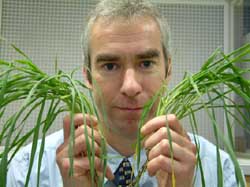
Picture: Don't be complacent with eyespot following the wet weather, warns Rod Burke of Syngenta. And remember the importance of controlling both R and W strains April rains fuel eyespot risk 13 April 2004
DON'T be complacent with eyespot risk in winter wheat this season, growers are being warned. April showers have provided ideal conditions for the stem-based fungus to thrive. But the yield response from an eyespot fungicide could be as high 1 t/ha.
"My biggest concern is that growers might be complacent following the low eyespot levels last season, when conditions were dry," says eyespot expert Rod Burke of Syngenta. "Unless the problem is stamped on in crops at risk, levels could soar later. But by then control is too late.
"Essentially, it's a race between the fungus and the plant," he stresses. "In dry conditions, the outer layers of the wheat stem die back, taking the disease with them.
"But in wet seasons like this, the fungus is kept alive. So it has longer to penetrate the stem base. Here, it reduces yield by restricting water and nutrient flow when grain sites are filling."
On top of the weather risk, Mr Burke says that although recent cold temperatures halted crop growth, they were unlikely to have stopped eyespot penetrating the stem, since the fungus continues growing down to 5 deg C.
"Where agronomic factors indicate a risk, growers should consider adding a specific eyespot fungicide, such as Unix, to their T1 spray.
"Adding Unix will control W type, but also the more common and aggressive R type eyespot. Even in an average eyespot risk situation, calculations show a return on investment of £5.87 from £1 spent on Unix," he adds.
Across six years of testing between 1998 and 2003 across the country - East, North, West, South West and Scotland - Mr Burke says results showed around 80% of crops had eyespot present.
Factors to consider when determining eyespot risk
* Cool, wet spring weather
* History of eyespot infection
* Variety resistance rating
* Ploughing increases eyespot risk
* Early drilling slightly increases risk
* Removing previous wheat straw increases risk over incorporating
* Other cereal crops in the rotation increase risk




