




High disease risk adds to brassica growers woes
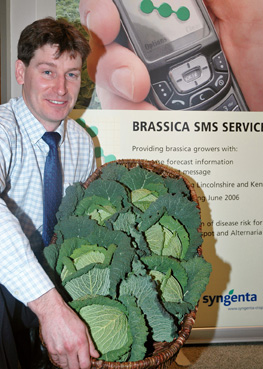
The difficult growing season so far encountered by brassica growers is set to become even worse with high levels of leaf disease prevalent earlier than normal this year, reports Andy Richardson of the Allium & Brassica Centre (ABC).
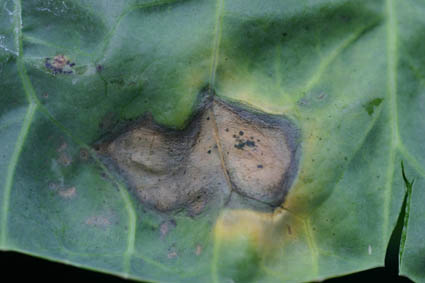
Localised pockets of Ringspot, Light Leaf Spot and Phoma are all beginning to cause unsightly leaf spots, but more worryingly Xanthomonas has already been identified, with the major potential to cause real problems in the months ahead, he warns.
"Wet soil conditions have put plantings well behind normal, and continuity of supply is going to be a huge issue for the brassica supply chain. Growers are going to have to make every effort to keep crops growing as quickly and healthily as possible," he advises.
Mr Richardson highlights that Xanthomonas bacterial infection caused significant loses in marketable yield through the wet autumn last year, with cabbage and late autumn cauliflower particularly badly affected. He aims to combat the impending problem this season through improved control of Ringspot, Alternaria and Phoma, which seem to make plants more susceptible to Xanthomonas infection.
"Although fungicides have no direct effect on the bacteria, our experience with Amistar Top in trials is that the enhanced control of leaf fungal diseases has a significant effect on reducing the damage from Xanthomonas," he says. The higher level of difenoconazole in the Amistar Top mix, compared to straight Plover, gives a greater degree of curative activity and longer lasting protection against Ringspot, Alternaria and Phoma.
He has seen a significant enhancement in the control of Ringspot, which remains the most important leaf disease in Lincolnshire, and the strobilurin/triazole mix has also given good activity on Light Leaf Spot. Although hitherto only a real problem in Scotland, with the wet conditions and increase in oilseed rape cultivation Light Leaf Spot has been a found as far south as Lincolnshire this year, reports Mr Richardson.
"We are also seeing a far higher incidence of Phoma infection every year, with the risk of early and intensive attacks predicted this season," he adds. Wet soils and morning dew could be sufficient to trigger Phoma spore release from the high level of stem cankers on recently harvested oilseed rape stubbles.
Monitoring of brassica diseases by the Allium & Brassica Centre, for the Syngenta Brassica SMS disease forecasting service, has identified the combination of weather conditions and infective spore release to create an exceptionally accurate assessment of disease risk for Alternaria and Ringspot. "The extra difenoconazole in each dose of Amistar Top will improve control of both Ringspot and Alternaria in brassicas, and gave good protectant control of white blister in ABC trials last year," according to Mr Richardson.
He believes the synergistic combination of pre-mixed azoxystrobin and difenoconazole brings significant added benefits over the two individual components - particularly with enhanced effects seen on Powdery Mildew. "We recommend that a rigorous fungicide programme is maintained by all growers on susceptible crops, in conjunction with use of the Brassica SMS disease forecasting service to maximise returns."
Captions:
Andy Richardson: Brassica crops are forecast to suffer intense disease pressure this season, warns Andy Richardson. The extra curative activity of Amistar Top will prove especially useful, he advises.
Disease montage: Amistar Top gives growers powerful curative and protectant properties to tackle powdery mildew (top), white blister, Alternaria and Ringspot.
Phoma leaf spot: ABC trials have shown the improved control of leaf spot diseases with Amistar Top, including Phoma, could help reduce the incidence of damaging xanthamonus infection, reports Andy Richardson.




