




Key CAP vote ends as MEPs back mandatory 'greening'
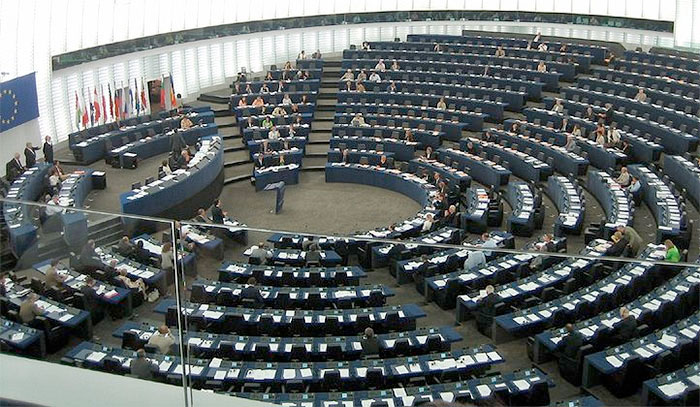
The European Parliament has backed plans to cap direct payments and made 'greening' measures mandatory as Wednesday's voting session ends.
"Today we have struck a proper balance between food security and improved environmental protection, so that the new EU farm policy can deliver even more public goods to EU citizens" said Agriculture Committee chair Paolo De Castro after the vote.
"But it also must be made less bureaucratic and fairer to farmers, not least to empower them to cope with crises."
This will be the first EU farm policy reform shaped by Parliament as a full co-legislator with member states. Farm groups have said they would prefer capping was struck out from the future CAP policy.
The Commission proposed that differences between member states in the levels of EU funding for farmers should be reduced slightly faster. It was agreed that no member state's farmers should receive less than 65% of the EU average.
NFU Deputy President Meurig Raymond said UK farmers were at a disadvantage due to gaps in payment levels between their European competitors.
"We are also urging MEPs to reject the excessive use of trade distorting coupled support payments that unfortunately the majority of agriculture committee MEPs supported and to minimise the powers that would see the gap in payment levels potentially widen further, leaving UK farmers at a competitive disadvantage were Defra to make use of the powers that it is fighting so hard to gain."
Parliament also voted in favour of the publication of beneficiaries of EU agricultural funding and inserted a list of land-owners, such as airports and sports clubs, which should automatically be excluded from this funding unless they prove that farming contributes a substantial share of their income. Member states could extend this list.
Young farmers will get a 25% top-up payments for a maximum of 100 ha and member states could also use more money to support small farmers.
Parliament backed Commission plans to cap direct payments to any one farm at €300,000, and substantially reduce payments to those receiving more than €150,000.
However, this would not apply to cooperatives which redistribute payments to their members.
"We interpret the negotiating text to mean that any suggestion of stepped reduction to larger payments, along with the overall ceiling at €300,000 as proposed, would become voluntary" said the NFU.
"We are absolutely opposed to payments being reduced in either of these ways and negotiators should ensure, at the very least, that both are left to the discretion of member states."
Greening
MEPs agreed that 30% of national budgets for direct payments should be made conditional upon compliance with mandatory greening measures, but they stressed that these measures must be made more flexible and gradual.
The three key measures - crop diversification, maintaining permanent pasture and grassland and creating "ecologically-focused areas", would remain but with certain exceptions, e.g. to reflect the size of the farm.
"We asked MEPs to make the greening proposals more workable and to ensure that the efforts of farmers already in agri-environment schemes was taken into consideration. We asked that if a farmer chose not to do the greening requirements, that he would only lose his greening payment" Raymond continued.
"We asked for changes to the way in which entitlements will operate in the future CAP and a properly functioning national reserve."
To help farmers cope with market volatility and strengthen their price bargaining position, their organisations should be given new tools and allowed to negotiate input and delivery contracts MEPs said.
These rules "must not translate into cartels, but strong producer organisations should allow farmers to break free from economic dependence and guarantee them a decent standard of living", said rapporteur for the Common markets organisation regulation Michel Dantin.
"This decision reflects the voice of European citizens on how the future EU farm policy should look. We need to ensure that we keep and promote rural economies and that competitiveness and protection of environment are compatible. This is how we can best use public money to deliver public goods for everyone", said rapporteur for the Direct payments and Rural development regulations Luis Manuel Capoulas Santos.
To ensure that the expiry of milk quotas does not lead to a serious crisis in the milk sector, MEPs said granting aid for at least three months to milk producers who voluntarily cut their production by at least 5%.
Amendments calling for prolongation of milk quotas, set to expire in 2015, were rejected by the House.
MEPs agreed the need to cut red tape and ensure that penalties for breaching rules were proportionate.
"We need to cut the time farmers spend on paperwork. Member states could now create an aid application that would remain valid for several years so that farmers do not have to register their claim each year but only when there are changes", said Giovanni La Via, rapporteur for the financing, management and monitoring regulation.
The final shape of the new EU farm policy will be decided by the European Parliament, EU farm ministers and the European Commission, in three-way negotiations which should begin in late March/early April.




