




Lion to audit ‘part-organic’ pullets
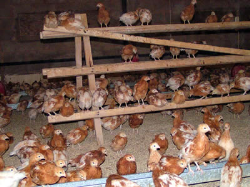
The BEIC has agreed to undertake the auditing of pullets being reared for organic laying farms.
The move follows a request from organic certification bodies and egg producers who were concerned that new rules—introduced from 1 January this year—governing pullets being reared for organic farms, made no provision for inspection.
Under the EU rules all pullets destined for organic units must now be fed an organic ration and be subject to organic veterinary standards—leading to the pullets being dubbed 'part-organic'.
But since no commercial rearing farms are actually organic then none of the certification bodies had any authority to check the premises or what happened upon them. The only requirement on organic producers is to secure a signed undertaking from the rearer that the birds have been organically fed and treated according to organic vet rules.
The BEIC has now agreed that it will 'bolt-on' to the Lion code the auditing of part-organic pullet flocks. That means Lion-registered rearers producing the birds will be required to answer an additional questionnaire as well as undertaking extra record keeping, staff training and produce management plans.
The BEIC is also requiring rearers to justify the use of normal vaccination programmes. "When a health plan is prepared for pullets destined for an organic laying system it should," says the BEIC, "be aimed at disease prevention by, for example, selection of appropriate breed or strain, bio-security, use of high quality feed and appropriate stocking density.
"However, if there are endemic problems either on the rearing farm or the intended laying farm appropriate vaccinations can be used. These should be justified and documented in the veterinary health plan."
The plan will need to be agreed by both the vet for the rearing farm and for the laying farm.
The Lion code rules say that the rearer must have a documented plan to manage birds to the required standards. "This must be available to on-site managers and training should be documented for staff dealing with birds for organic production," says the BEIC.
Rearers will have to show proof of organic feed supplies and details to prove that what the birds have eaten during rear has been at least 85 per cent organic content (the current EU requirement).
They will also need to produce documented evidence of how feed bins are cleaned and if feed is transported around the site in intermediate bins, how they are cleaned in between carrying organic and non-organic rations.
BEIC vice-chairman Andrew Jorêt told the Ranger why the Council had decided to act. "With no mechanism in place for the inspection of procedures on the rearing farm we felt it was necessary to take steps in order to maintain the credibility of organic eggs," said Mr Jorêt. "Simply relying on a written undertaking that the rules have been followed could be open to abuse."




