




New fungicide to help growers make more out of barley
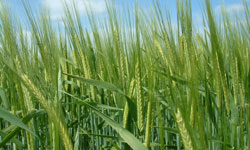
Barley – a valuable crop in rotations, but effective control of Rhynchosporium must be sustained.
UK barley growers will have an advanced way to make more of the barley crop's better prices by tackling its major yield-robbing diseases this season – while also responding to concerns over fungicide resistance.
Kayak, from Syngenta, is a new liquid formulation of the fungicide cyprodinil. As well as providing a significant improvement in control of the major disease Rhynchosporium, it has a big part to play in resistance management with no known Rhynchosporium resistance in the UK, says Syngenta cereal disease specialist, Matt Pickard.
The significance of this is that Rhynchosporium sensitivity to commonly used triazole fungicides has declined recently, and continues to be a risk. So Kayak not only provides a high performing option, but could also ease the resistance pressure on triazole fungicides, while also controlling net blotch, mildew and eyespot, he adds.
"With grain prices for feed barley having reached over £90/t recently, the prospects for the crop are much-improved," explains Mr Pickard. "However, against that, Rhynchosporium can slice up to 2t/ha off crop output.
"In developing Kayak, our target was to achieve a 25% improvement in Rhynchosporium control over the previous wettable granule cyprodinil formulation. We found Kayak not only achieved the increase in control, but did so using less active ingredient.
"It is all part of a wider strategy to help growers boost the sustainable output from barley. Besides being a profitable crop in its own right, barley's early harvest is becoming increasingly important for growers – by helping spread workloads as farms enlarge or operate with fewer staff, or providing an early entry for oilseed rape, for example for biofuels," he adds.
Leading independent researcher Dr Simon Oxley of Scottish Agricultural Colleges agrees that Rhynchosporium sensitivity shifts to triazoles are concerning.
It is the key wet weather disease affecting UK barley, he says, but some popular varieties have poor resistance, so control is very much fungicide dependant. Already, among older triazoles, he says there has been a decline in sensitivity. But while newer triazole chemistry remains active, it is very heavily relied upon in fungicide programmes, he warns.
"We don't want to over-use triazoles to make matters worse. Essentially we are looking to stop the shift and maintain control. Having Kayak as a different mode of action makes it a useful mixture partner. It offers us a potential anti-resistance strategy," he adds.
Turning to control, Dr Oxley says early fungicide applications are crucial, particularly since the disease can come from seed as well as being spread by rain. Treatment at growth stage 25-30 in March can help minimise disease flair up in April. The GS 31-32 treatment remains the key treatment in winter barley for yield, while a GS 49 spray helps against later infections, which could spread back onto seed.
In SAC tests, Dr Oxley has also seen improved Rhynchosporium performance from Kayak over the older wettable granule formulation, and sees its main use in mixtures. "With Rhynchosporium control you have to start early," he stresses.
Syngenta technical manager David Ranner agrees that Kayak offers a useful anti-resistance partner. In studies on one particular Rhynchosporium isolate where triazoles gave a maximum of 60% control, Kayak gave almost 90%.
"It maintains efficacy against these less sensitive isolates, which makes it an ideal mixture partner," explains Mr Ranner. "For best results it is advised to mix it with a triazole, or with a strobilurin-based product like Amistar Opti."
In more protective situations, where disease is expected, but not yet present, Mr Ranner says Kayak with Amistar Opti would be his preferred mix.
Alternatively, where disease is already present, and more curative action is needed, a mixture of Kayak with the triazole prothioconazole would be an option, he suggests. This has given high yields against alternative treatments in independent ADAS and TAG trials.
"Overall, we believe the new liquid formulation works better because it gives more efficient delivery of active ingredient onto the target and increased uptake by the barley plant.
"These result in better performances against disease, an improvement in curativity, and increased rainfastness. Used as part of a wider strategy – with high yielding varieties – it could play a key role in helping sustain barley outputs for the future," he adds.




