




New study shows that energy crops are good for birds as well as the environment
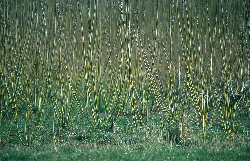
A new five-year study carried out by The Game Conservancy Trust has revealed that apart from reducing global warming, growing energy crops such as willow could also substantially boost insects and other wildlife on British farmland, including declining bird species such as willow warbler and skylark.
The study, which is to be published in Ibis, a scientific ornithological journal, was funded by the Government's Department of Trade and Industry (dti), and forms the latest part of a 14 year research programme by the Trust into the potential environment impacts of commercially grown energy crops such as short rotation coppice (SRC) on four different wildlife groups - birds, plants, butterflies and insects.
Dr Rufus Sage, Head of Lowland Gamebird Research with the Trust said, "There was very little information on the impact of large-scale SRC plantations on the countryside and its wildlife. The Game Conservancy Trust has therefore been carrying out detailed studies to determine whether large plantings of energy crops could displace open farmland species like grey partridge and yellow wagtail.
There are two types of biomass or energy crops grown in the UK, with Miscanthus grass and willow or short rotation coppice (SRC) being the most advanced. These crops are grown to produce wood chips for subsequent conversion to provide heating or power generation. They are carbon neutral and their commercial development would represent a significant step towards the UK Government's commitment to renewable energy production. It is hoped that commercially planted SRC could become a significant feature of the countryside, representing a major change in land use.
This latest study shows that willow is particularly good for breeding farmland birds such as warblers and buntings because it attracts so many insects, in fact more than any other tree species. Rufus Sage said, "In one small study we found that in excess of 50 different insect species had established themselves in the willow canopy and it is this factor that makes it a wonderful foraging ground for farmland birds."
Apart from helping us to meet our renewable energy targets this study has highlighted that SRC has the best biodiversity potential of any other row crop and is therefore an excellent alternative use of arable land. Rufus Sage comments, "Our research recorded more species in and around SRC than equivalent arable or grassland throughout the year. This is because SRC crops are often weedy and insect rich, which is one of the critical components missing from most modern farmland. I would therefore like to see it planted more extensively as it is a great addition to farmland. But to maximise its biodiversity and wildlife benefits, planting schemes need to be carefully planned in order to create a varied age structure and the crops need to be dotted around the land to create lots of 'edge', because it was the edge zone of the crops that appeared to be particularly attractive to most species studied."
Following on from this research, The Game Conservancy Trust has started a new study to further our understanding of plants and insects in biomass crops. This wider study, which is being led by Rothampsted Research, is investigating the socio-economic implications of energy crops. The project is funded by the RELU (Rural Economy and Land Use) programme and supported by the Research Councils UK.




