




PGRO Pulse Crop Bulletin - 2nd June 2011
Becky Ward, PGRO senior technical officer, advises:
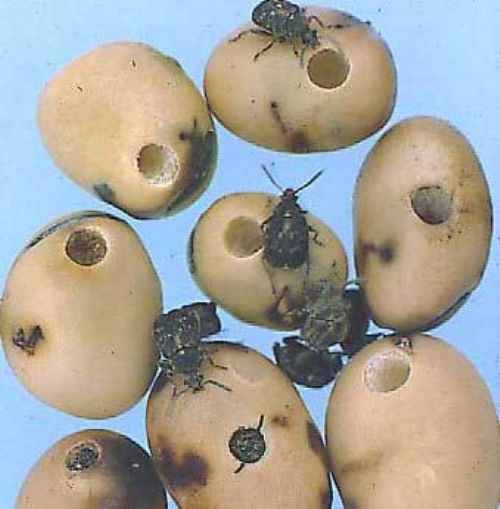
Bruchid beetle control
Many winter bean crops have pods on the bottom nodes and may have had a first insecticide application for bruchid control. Second sprays should be applied seven to ten days after the first.
In spring beans, where pods are exposed on the bottom nodes and temperatures reach 20°C for two consecutive days, crops should be sprayed to control bruchid beetles. Temperatures are currently forecast to rise above 20°C in some areas in the next few days.
Pea moth
Pea moth thresholds have been reached in traps in some areas and spray applications are forecast for the beginning of next week (6th June) based on a threshold trap catch date of 23rd May. For specific information about spray dates for your area call the PGRO pea moth telephone service on 01780 783099.
Silver-Y moth in vining peas
Silver Y moths are being caught in low numbers in traps. A threshold is reached when a cumulative total of 50 moths has been reached by the time the peas have reached the first pod stage (gs 204). When the threshold has been reached, a single spray of a pyrethroid insecticide, approved for pea moth control, should be applied 10 – 14 days later to vining peas. This application will control both large and small caterpillars, which fall off the plants before the crop is harvested.
Pea midge
Increased soil moisture content may encourage pea midge to hatch. Pea midge larvae feed within the developing bud during the summer, often causing distortion of the bud and foreshortening of the flower stalks – referred to as ’nettle-head’ effect. Damaged buds fail to produce pods.
Vining peas are more severely affected than combining peas due to their determinate growth habit, producing a short flowering period. Yield loss can be up to 50% where infestations are high. Susceptible crops are those which are at enclosed bud stage.
In areas where midge has been a problem in the previous year, crops should be examined for midge adults by pinching the outer leaves of the growing point together and peeling back the leaves to reveal the bud. If adult midges are found an insecticide should be applied as soon as possible to reduce the risk of eggs being laid.
A pheromone trap monitoring system is available from Oecos (11a High Street, Kimpton, Herts., SG4 8RA Tel: 01438 832481).
Winter bean disease
Some winter bean crops are developing chocolate spot, and the recent rain may encourage further development.
Overall disease pressure in many winter bean crops has been relatively low due to dry weather, but the rain this weekend may cause increased levels of chocolate spot, and spray applications may be due in crops when the opportunity arises.
Second fungicide applications should be made 21 to 28 days after the first. Further information about products for disease control is available on PGRO Technical Updates (167 and 173).
Spring bean disease
There have been few reports of downy mildew infection in spring bean crops, but recent rainfall and humid conditions may encourage development of the disease.




