




Spraying fast does not always pay
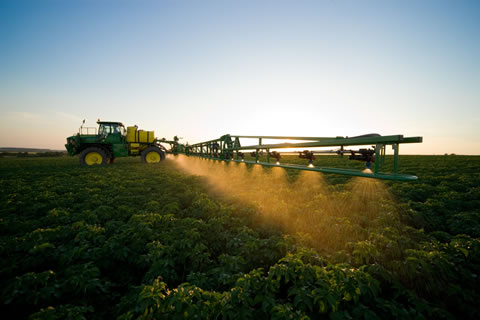
Even though a larger area can be sprayed by driving quickly over the field with the sprayer, it is not always the most efficient solution. Studies show that fast spraying can lead to reduced efficacy.
By increasing speed the farmer can spray his fields in less time – or cover a larger area in the same time. However, it is not always the best solution according to studies from, among others, the Faculty of Agricultural Sciences.
- The effect and yield after spraying faster than normal must be just as good as it is after spraying while driving at a moderate speed before increased speed can be recommended, says senior scientist Peter Kryger Jensen from the Faculty of Agricultural Sciences, Aarhus University.
Increasing driving speed has two effects. One factor is the increased wind, which affects the spray. Using conventional sprayers without air-assistance, increased driving speed causes more of the small droplets to be forced out of the spray swath. This makes them more prone to drifting, uneven distribution in the field, and evaporation.
The other factor is boom movements which is expected to interact with speed. In studies with research sprayers only the first factor has been investigated but in studies with full scale field sprayers a combined effect has been observed.
- With applications in the late growing stages at increased speed a larger portion of the spray is deposited on the upper plant parts whereas less is deposited on the lower leaves. Increased speed pulls a larger proportion of the small droplets out of the spray swath and distributes these droplets over a greater area where they are more prone to drifting, evaporation and uneven distribution in the field.
On the basis of several studies Peter Kryger Jensen describes that in some cases there is poorer protection against diseases if the driving speed is increased from 6 to 12 km/h. He recommends using a moderate driving speed of 6-8 km/h with conventional field sprayers.




