




Taking the organic pullet plunge
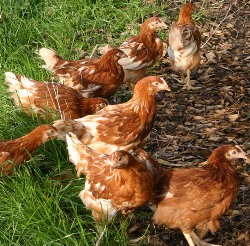
Most organic producers are bracing themselves for the impact of major increases in pullet costs.
From the beginning of next year all birds destined for organic units will have to be fed organically from day old. And those certified by the Soil Association are facing ever increasing pressure to buy only pullets that have been reared to full organic specifications.
But while others wait and worry BFREPA member James Potter has taken the issue head on. He has plunged straight into rearing all the 13,500 fully organic replacement pullets needed for his family's Soil Association unit in Yorkshire.
The farm is part of a Potter family empire, based near Thirsk, which as well as James also involves father Roger, mother Sue and brother Adrian. The laying side of the business involves a total of 26,000 organic birds, 12,500 of which are certified by Organic Farmers and Growers, and a free range operation which totals another 80,000 birds. Ninety per cent of the free range replacement pullets are also home-reared.
The eggs are sold through the family's own packing and marketing operation, Yorkshire Farmhouse Eggs, which also handles supplies from another 35,000 birds under contract.
Thanks to the decision to begin organic rearing the Potters must now rank as one of the biggest producers of Soil Association pullets in the country. But the move was made almost be default.
"I just assumed everybody would be doing it," says James. "We were constantly being asked by the Soil Association where we were going to be sourcing fully organic pullets and in the end it seemed the obvious route to take."
The decision involved sacrificing space that could have taken another laying shed. Instead it became home to two 2,000-bird mobiles, one from Big Dutchman and one from Liberty Livestock Systems.
The birds are given access to range from seven or eight weeks and remain in the rearing sheds until 19 weeks. This means laying sheds need only remain unproductive for a week or so. And after a year in operation the system has been declared an unmitigated success.
"It's so easy," says James. "We accommodate the requirement to rest the ground by using one side of the shed for one batch and the other side for the next. Turn round, which involves moving the building and pressure washing takes just three hours.
"When we move the birds an entire batch can be caught, vaccinated and in their laying shed, which is just a couple of hundred metres away, within an hour."
He is also convinced that rearing birds on site has health advantages. Although the pullets have a full vaccination programme they are also naturally exposed to resident viruses.
"It makes a great deal of sense to allow birds to develop an immunity to IB, for example, in the rearing phase," says James.
Results speak for themselves. Performance of the organic birds equals those for the Potter free range flocks.
And having been accustomed to ranging from a couple of months old the laying flocks make maximum and immediate use of the range. In fact the success of this aspect of the operation has been so marked that trials are now in hand to give free range pullets the same early access to the outdoors.
There have been only two problems. The birds are not beak-trimmed, in accordance with SA rules, and a recent batch did develop a feather pulling problem late in rear. A new breed of bird is now being trialed.
The other issue is light control. Light baffles inside the sheds have helped resolve the problem but in spring and summer it can be necessary to usher young birds back indoors in the early evening.
"The fact that the buildings are mobile has not presented a light problem really," says James, "but it is clear that the Soil Association will have to address the light issue."
But in general the Potters have come up smiling from the pullet plunge.
"I would say to any organic producer who is wondering whether to take it on, give it a go," says James.




