




7,500-acre estate bought for major nature recovery scheme
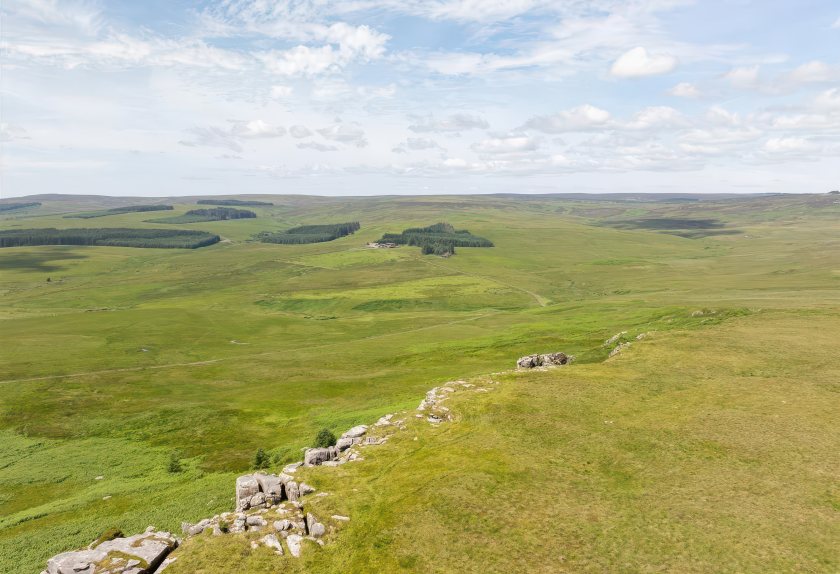
A 7,500-acre Northumberland estate has been acquired for a major nature restoration project backed by close to £9 million in blended finance.
Triodos Bank UK has provided senior debt to support RESTORE’s purchase of the Emblehope & Burngrange Estate, with the wider funding package combining philanthropic capital, private equity and bank debt.
RESTORE plans to rewet around 800 hectares of degraded peatland, restore damaged vegetation and introduce lower-intensity grazing systems across parts of the estate.
However, the announcement does not state how much of the estate is currently used for food production, how stocking levels will change or whether existing agricultural jobs, tenancies or supply contracts will be affected.
It also does not set out what proportion of the land will remain in agricultural production once the restoration programme is under way.
Historic drainage channels will be blocked to restore natural hydrology, increase water retention and help reduce downstream flood risk.
Modelling suggests the restored peatland could eventually hold around 100,000 cubic metres of additional water.
That is equivalent to about 40 Olympic-sized swimming pools or the annual water use of roughly 700 households.
Over time, RESTORE expects the landscape to develop into a mix of open water, bog, scrub, dwarf trees and flower-rich glades shaped by natural processes.
The project comes amid wider debate over how large-scale nature recovery schemes affect domestic food production and agricultural land use.
As habitats improve, RESTORE said species including curlew, golden eagle and common crane could recolonise naturally over time.
Any future reintroduction of red-backed shrike, black grouse or wildcat would depend on ecological evidence and the necessary permissions.
The project is also intended to create land stewardship and community engagement roles while supporting local businesses.
Benedict Macdonald, founder and director of RESTORE, said the project would establish a large-scale site focused primarily on nature recovery.
“What has long been missing from the English uplands is a large-scale site dedicated primarily to the most ambitious forms of nature restoration,” he said.
Macdonald said Emblehope would differ from conventional upland estates because nature restoration, rather than farming or forestry, would be its primary purpose.
Triodos Bank UK said the transaction demonstrated how different forms of capital could be combined to support nature recovery at scale.
Simon Crichton, head of nature, food and resource at the bank, said: “Financing Emblehope marks an important step in unlocking investment at scale for nature recovery.”
He added that the project showed how philanthropic funding, equity and bank finance could work together on large restoration schemes.
RESTORE said it had raised close to £9 million despite being less than three years old and initially backed with under £500,000 of equity.
The company believes the financing model could be repeated elsewhere in the nature restoration sector.
Details of how the estate will generate sufficient long-term income to fund management and service its debt were not disclosed.
The announcement did not explain whether future income would come from environmental markets, grants, tourism, continued farming or other sources.
The project will now move into a long-term restoration phase, with peatland works, grazing changes, habitat recovery and community engagement expected to develop over several years.




