




Farm leaders urge Andy Burnham to act on food security
Farming leaders have urged new prime minister Andy Burnham to make food security and tenant reform early priorities as he begins shaping his programme for government.
Mr Burnham described his arrival in Downing Street today (20 July) as a “circuit breaker” moment for Britain after succeeding Sir Keir Starmer.
In his first address outside No 10, he promised immediate action on the cost of living from Tuesday and said a 10-year political and economic plan would be published later this year.
The plan would aim to move the country from “where we are now to where I believe we all want Britain to be”, he said.
Mr Burnham also pledged measures intended to give households “some breathing space now”, with action on energy bills and bus fares expected to form part of the package.
The NFU has written to the prime minister to stress the importance of farmers and growers in feeding the UK’s population of 70 million.
It welcomed his recent emphasis on protecting Britain’s production capacity in critical sectors, including food and farming.
The union urged ministers to adopt an industry roadmap designed to strengthen domestic food production, unlock investment and employment, and make supply chains more resilient.
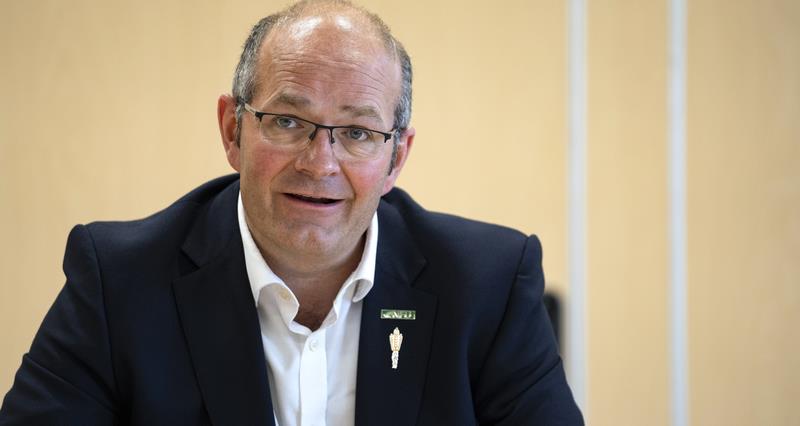
NFU president Tom Bradshaw said: “British farmers and growers are the bedrock of the nation’s food security, putting food on the plates of 28 million households every day.”
He argued that food security had too often been overlooked while defence and energy were treated as national priorities.
The NFU wants Labour’s manifesto commitment that “food security is national security” to be translated into practical measures.
Its immediate demands include planning reform to enable farm investment, proportionate regulation that supports innovation and reliable access to workers for farming and horticultural businesses.
The union said these changes could increase production, support economic growth and help ease pressure on household budgets.
The Tenant Farmers Association has separately called for the tenanted sector to be placed at the centre of the government’s farming and rural agenda.
Tenant farmers manage around 30% of the country’s agricultural land, according to the association, while producing food and maintaining rural landscapes without owning the land beneath their businesses.
The TFA wants ministers to encourage longer agricultural tenancies and ensure future farming, environmental and nature-market schemes work for tenants.
It is also seeking fair compensation where development forces tenants from land, along with a timetable for tenancy reform during this Parliament.
The association argues that short agreements discourage investment because tenants may not remain on a holding long enough to recover the cost of improvements to soil, buildings or infrastructure.
“A farmer cannot sensibly plan a long-term rotation, build fertility, invest in infrastructure or change a business model if the tenancy horizon is one, two or three years,” TFA chief executive George Dunn said.
The TFA called for changes to the tax framework affecting landowners, or another measure capable of encouraging longer lets.
It warned that tenant farmers could not be expected to deliver long-term national ambitions for food production, nature recovery, soil health and carbon reduction while working under insecure agreements.
The association also wants future public support to remain accessible to the active farmer carrying out the work and taking the financial risk.
It said schemes should not give landowners an incentive to remove land from tenants to claim payments directly.
Concerns were also raised about solar developments, infrastructure projects and other changes of land use displacing agricultural tenants.
The TFA said compensation should reflect the effect on the entire business, as well as the possible loss of a home and livelihood, rather than only the immediate value of the land involved.
Although it has welcomed forthcoming Law Commission work on agricultural tenancy legislation, the association said urgent policy decisions should not be delayed by a lengthy review.
“Tenant farmers cannot wait the best part of a decade for change while short tenancies continue, land is removed from agriculture and compensation gaps remain unfilled,” Mr Dunn said.
Both organisations are seeking early talks with the new government.
The TFA has offered to host Mr Burnham on a tenanted farm during his planned summer listening tour, while the NFU wants food resilience reflected in his forthcoming programme for government.




