




Farmers brace for further flooding as heavy rain prolongs disruption
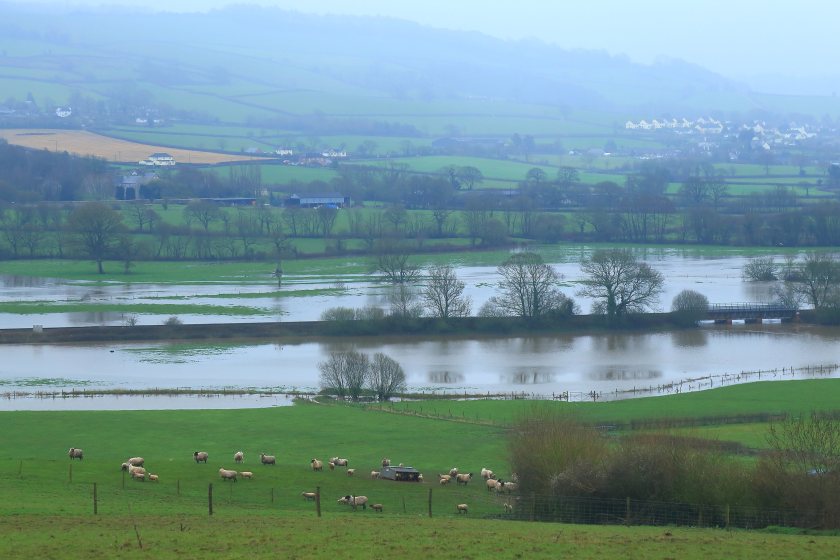
Farmers across southern England are bracing for further disruption as heavy rain threatens to prolong flooding on farmland and delay early spring work.
With soils already saturated and rivers running high, the Environment Agency has warned that unsettled weather will keep flood risk elevated in the coming days. There are currently 76 flood warnings and 157 flood alerts in place nationwide.
For many agricultural businesses, the concern now centres on waterlogged grazing ground, struggling winter crops and limited access along rural roads. In low-lying areas, prolonged groundwater flooding could leave fields out of action for weeks.
Multiple groundwater flood warnings remain in force in Dorset, Wiltshire and Hampshire. Because groundwater levels rise and fall slowly, disruption can continue long after rainfall eases, affecting soil structure and delaying machinery access. Minor groundwater impacts are also possible in parts of Kent and East Sussex.
On the Somerset Levels and Moors — where farmland is particularly vulnerable — agency teams have brought pumps online to stabilise water levels. Officers are also clearing vegetation, removing river obstructions and installing temporary barriers to help protect surrounding land and properties.
At least 300 properties have been recorded as flooded so far, while more than 22,000 have been protected by defences, although those figures may change as assessments continue.
Water levels remain very high in parts of Dorset and Wiltshire, with officials working alongside councils, water companies and emergency services. In rural areas, submerged roads are adding to the disruption.
Jonathan Day, Flood Duty Manager at the Environment Agency, said: “With another band of rain on its way, we need the public to remain vigilant to the risk of flooding.”
He warned that “significant groundwater flooding impacts are probable in parts of Dorset and Wiltshire”, while “significant river flooding impacts remain probable in the Salisbury area” and may continue on the Somerset Levels.
More than 22,000 homes and businesses have been protected, Mr Day said, but “sadly 300 have suffered flooding”. He added that teams will continue supporting communities with pumps, temporary barriers and by clearing waterways.
Drivers are being urged not to attempt to cross flooded roads, particularly in rural areas where fast-moving water and hidden damage can pose serious danger. “It is extremely dangerous to drive through flood water,” Mr Day stressed.
Floods Minister Emma Hardy, who visited Langport in Somerset this week, described flooding as “devastating” and urged residents to follow local advice as further rain approaches.
She pointed to a record £10.5 billion investment in flood protection designed to safeguard a further 900,000 properties — including rural homes, businesses and agricultural land — by 2036. More than £100 million is also being directed towards maintaining existing flood assets.
Even if rainfall begins to ease, rivers, moors and groundwater are expected to respond slowly to earlier downpours, meaning levels could continue rising in some areas.
With more rain forecast and fields already saturated, many farming communities now face the prospect of prolonged waterlogging and delayed spring workloads as efforts continue to limit further damage to land, livestock and rural infrastructure.




