




Farmland values slide 4.1% as buyers hold back
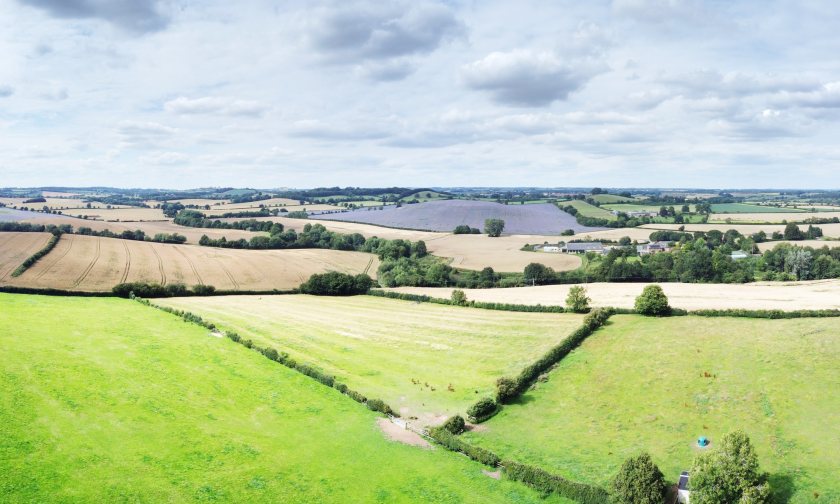
Average farmland values in England and Wales fell to £8,497 an acre in the second quarter of 2026, leaving prices 4.1% lower than a year earlier.
Knight Frank’s latest Farmland Index recorded a 1.5% quarterly decline, marking the weakest 12-month performance since 2017.
The amount of land advertised for sale during the first half of 2026 was also almost 25% below the same period last year, according to Farmers Weekly Land Tracker figures cited by Knight Frank.
Despite the slowdown, average values remain historically high. Bare agricultural land has increased in value by more than 20% over the past five years and almost 185% over two decades.
Knight Frank described the market as being in a holding pattern, with purchasers showing little urgency and many landowners unwilling to accept lower offers.
Buyers and sellers are still waiting for greater clarity over future tax, agricultural and environmental policies following the change in Labour’s leadership.
Higher fuel and fertiliser costs could add further pressure to farm profitability over the coming year.
Will Matthews, head of farms and estate sales at Knight Frank, said the shortage of transactions was making it difficult to establish a typical market price.
“Because sales volumes are so low at the moment, it is impossible to say what an acre of land is worth,” he said.
“The right block of land in the north Cotswolds could still make £20,000 an acre, but in other areas you might be pleased to achieve £10,000 an acre.”
Prices can vary substantially depending on factors including location, land quality, access, parcel size and the level of competition between buyers.
Mr Matthews said these differences meant local and regional averages were becoming less useful when assessing individual sales.
“In the past we’ve talked about regional sub-markets, but now every sale seems to have its own microclimate,” he said.
Political and economic uncertainty has encouraged some purchasers to negotiate below guide prices, creating the impression of a buyer’s market.
However, many vendors are not under pressure to sell and are prepared to retain their land rather than accept an offer below expectations.
Mr Matthews said available funds were not the main obstacle, arguing that “the biggest issue isn’t affordability; it’s really sentiment”.
He said Knight Frank had recently achieved some strong prices and attracted significant interest in newly launched properties, but deals were taking longer to complete.
The consultancy does not expect a sharp fall in farmland prices over the summer, with few signs that substantially more land will be brought to the market.
Limited supply and continued demand for high-quality farms and estates in desirable locations are expected to support values, despite wider political and economic pressures.
The Knight Frank Farmland Index has tracked the value of bare agricultural land since 1944.




