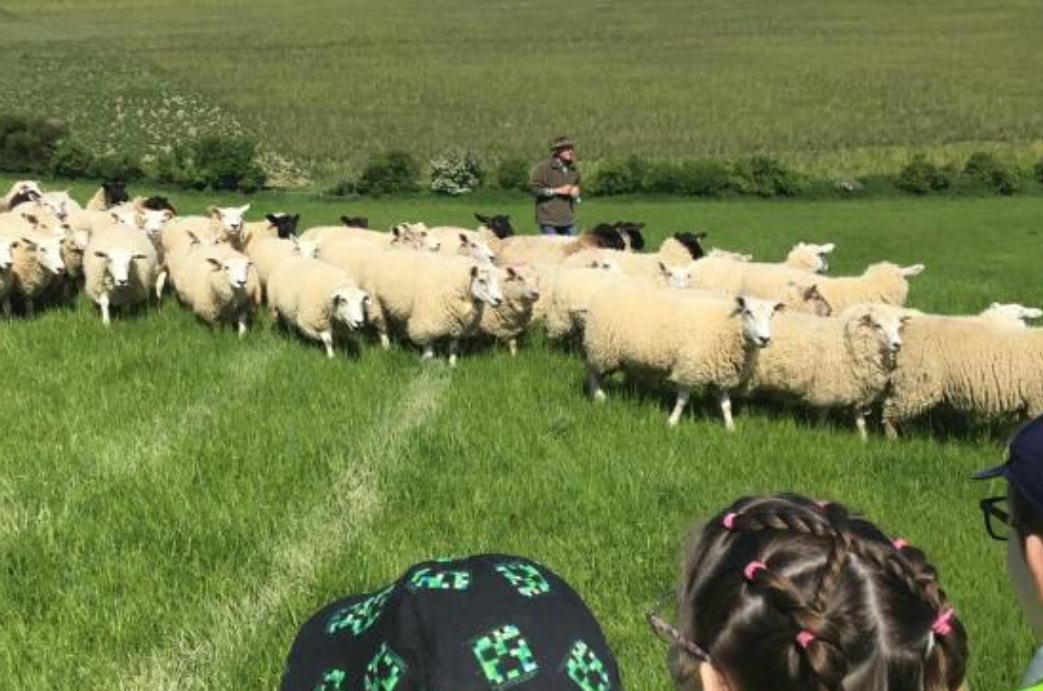
More than 1,200 children have already taken part in a scheme linking classrooms with local farms, as growers open their gates to teach pupils about food production, farming and nature conservation.
The Farm School initiative brings together Brighton and Hove City Council, its tenant farmers and local schools, introducing children to the farms that surround the city and the role they play in producing food while caring for the environment.
The programme forms part of the four-year Changing Chalk project, which is supported by a £2.23 million grant from the National Lottery Heritage Fund.
Through guided tours, hands-on activities and nature walks, children learn about sustainable farming, wildlife and the conservation of rare chalk grassland, helping them understand how food production and nature restoration work side by side.
Since the project began in 2023, more than 1,200 pupils have visited farms taking part in the scheme, including Standean Farm, Ovingdean Grange Farm, Housedean Farm, Balmer Farm, Mile Oak Farm, Perching Manor Farm and the Truleigh Centre.
Jane, who farms at Standean Farm alongside Tim, said the visits give children a genuine sense of what farming involves. “The farm school initiative allows our local children to experience the wonders of farming and farm life in reality – the smells, the noises, the animals and the scale of the machinery used,” she said.
She added that the transformation she sees over the course of a visit is especially rewarding. “Seeing groups arrive with an air of apprehension and then 4 hours later see them waving goodbye with enthusiasm and anticipation of another visit is priceless. It’s good for the future.”
Councillor Tim Rowkins, deputy leader and cabinet member for net zero and environmental services, said the project was helping to build strong links between education, farming and the natural landscape.
“It’s great to see the strong connections being forged between local farmers and schools and the enjoyment children get from seeing sustainable farming up close,” he said.
He added that the city’s setting made the scheme particularly significant. “Brighton & Hove is surrounded by the South Downs, much of which is publicly owned.
"We’re also part of the Living Coast, the only UNESCO urban biosphere reserve in the UK, so it’s vitally important that children can see where their food comes from and the plants and wildlife that are returning thanks to nature restoration,” he said.
Farm School Co-ordinator Hannah Tedman thanked the farmers involved for their commitment. “I would like to say a huge thank you to all the wonderful farmers involved in the Farm School project,” she said.
“They have welcomed children onto their farms and shared their knowledge and expertise in producing food, looking after our local landscape and supporting nature.”
Organisers say further school visits are planned as the project continues, with the aim of inspiring the next generation to value food production, farming and the countryside.