




Rare 428-acre Lake District grazing fell listed for £600,000
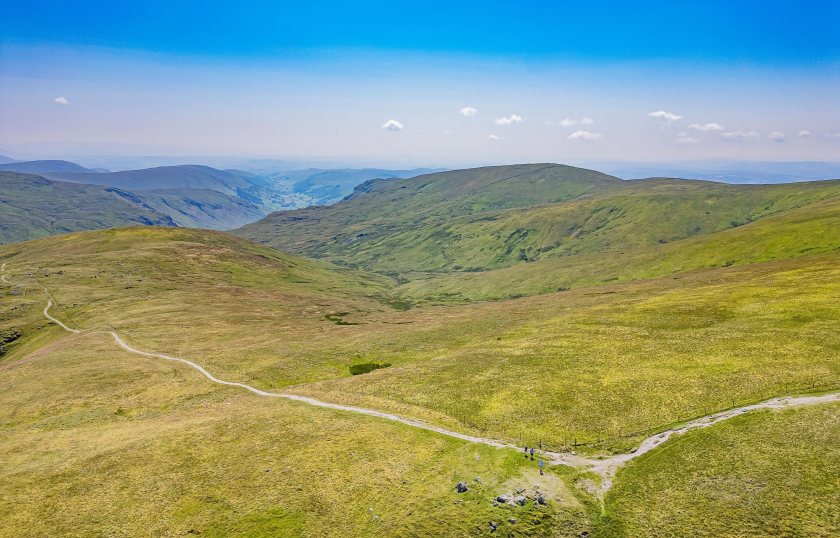
One of the largest blocks of productive Cumbrian fell land to reach the market in recent years is being offered for £600,000.
Harter Fell lies at the head of the Longsleddale Valley near Kendal and is being marketed by the South Lakes office of H&H Land & Estates.
The land occupies a prominent position overlooking Haweswater and the surrounding Lakeland fells. It is situated within the Lake District National Park and UNESCO World Heritage Site.
The holding comprises approximately 411.43 acres of summer grazing and 17.10 acres of recently planted woodland. It is being sold as a single, well-defined block.
Natural water supplies include the source of the River Sprint, while the boundaries feature well-maintained post-and-wire fencing and sections of traditional dry-stone walling.
The land is currently entered into an Environmental Stewardship agreement under the Entry Level Stewardship and Higher Level Stewardship schemes. The agreement runs until May 31, 2028.
H&H Land & Estates expects interest from neighbouring hill farmers and local graziers seeking additional summer grazing. The property could also appeal to buyers exploring environmental land management, biodiversity and natural-capital opportunities.
George Carney, rural surveyor at H&H Land & Estates, said opportunities to acquire fell land of this scale were uncommon.
“As a company, we rarely see opportunities like Harter Fell come to the market. Blocks of fell land of this size and quality seldom become available,” he said.
Mr Carney said the holding’s natural water supplies and limited areas of bracken and exposed rock strengthened its value as summer grazing.
“It is an excellent summering fell with good natural water supplies and very little bracken or rock outcrop,” he added.
“Traditionally, land like this has been highly valued by neighbouring hill farmers looking to strengthen their grazing capacity, but today it also offers significant opportunities for those interested in environmental schemes, biodiversity and natural capital.”
Fell grazing has long been an important part of Cumbrian hill farming systems. Moving sheep to higher ground during the summer allows lower fields to be rested or used for silage and winter forage production.
Upland holdings are also increasingly being considered for habitat management, woodland creation and biodiversity enhancement.




