




Real-time waste tracking to tackle rising fly-tipping crisis
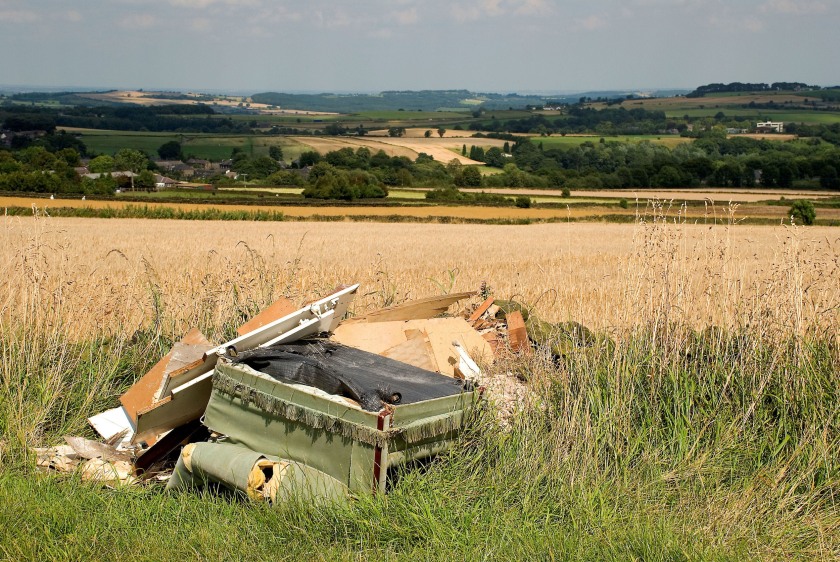
A new nationwide digital system will track waste in real time, as the government steps up its crackdown on a £1bn-a-year waste crime problem — an issue that continues to hit farmers and landowners hard.
Under new laws being introduced in parliament, businesses will be required to digitally record waste movements, creating a full audit trail from source to destination. The move forms a key part of the government’s Waste Crime Action Plan aimed at tackling illegal activity and protecting legitimate operators.
Waste crime is a growing issue, costing the UK economy around £1 billion each year. Fly-tipping alone is estimated to account for a significant share of this, with incidents in England rising to 1.26 million — a 9% increase on the previous year — placing increasing pressure on farmers and rural landowners.
Despite this, waste is still largely tracked using paper-based systems, which ministers say are outdated, overly bureaucratic and fail to provide enforcement bodies with the intelligence needed to build cases against offenders.
The new Digital Waste Tracking service is intended to replace this with faster, more reliable data. Officials say it will help regulators identify suspicious activity more quickly while making it easier for compliant businesses to meet reporting requirements.
For farmers, the system could improve traceability and help authorities identify those responsible for illegally dumped waste more quickly, although its effectiveness will depend on enforcement.
Mary Creagh, minister for nature, said the changes would strengthen enforcement and modernise the system. “Waste crime is a wicked business and the paper system we inherited was not fit for purpose,” she said.
She added that the new service would give authorities “better, more reliable evidence to go after rogue operators and shut them down”, while also cutting red tape for legitimate firms.
This means every load of permitted waste will be digitally tracked, improving transparency across the sector and making it harder for illegal operators to avoid detection.
The rollout will begin in October 2026 for permitted waste receiving sites in England, Northern Ireland and Wales, before extending to Scotland in January 2027. Around 12,000 sites will initially be covered, with more than 100,000 operators expected to fall within scope as the scheme expands.
A voluntary beta testing phase will open on 28 April, with waste operators and software developers encouraged to take part and help refine the system ahead of full implementation.
Industry leaders have welcomed the move, describing it as a step forward in tackling illegal activity and improving accountability.
Jacob Hayler, executive director of the Environmental Services Association, said the launch marked “a significant milestone of progress” in efforts to combat offending.
He added that, if implemented effectively, the system would help businesses ensure they are working with legitimate operators while providing regulators with the timely data needed to crack down on offenders.
Alongside the digital reforms, the government is introducing tougher measures under its Waste Crime Action Plan, including points on driving licences for fly-tipping offences, clean-up squads for offenders and enhanced enforcement powers for the Environment Agency.
An additional £45 million has also been allocated over the next three years to boost enforcement capacity.
The announcement comes amid ongoing criticism of the wider approach to fly-tipping, where landowners are often left responsible for clearing illegally dumped waste from their property, even when they are the victims of the crime.
Farmers can be forced to pay to clear waste dumped illegally on their own land — often at significant cost — and risk prosecution if they fail to remove it.
Many in the farming sector have long raised concerns over limited enforcement, with offenders rarely traced or prosecuted.
Campaigners say this places an unfair burden on farmers and rural communities, who are left to deal with the financial and practical consequences of waste crime.
While the new system is expected to improve oversight and traceability across the sector, farmers and landowners will be watching closely to see whether it leads to stronger enforcement on the ground.




