




Tenant farmer helps revive rare hay meadows on Llŷn peninsula
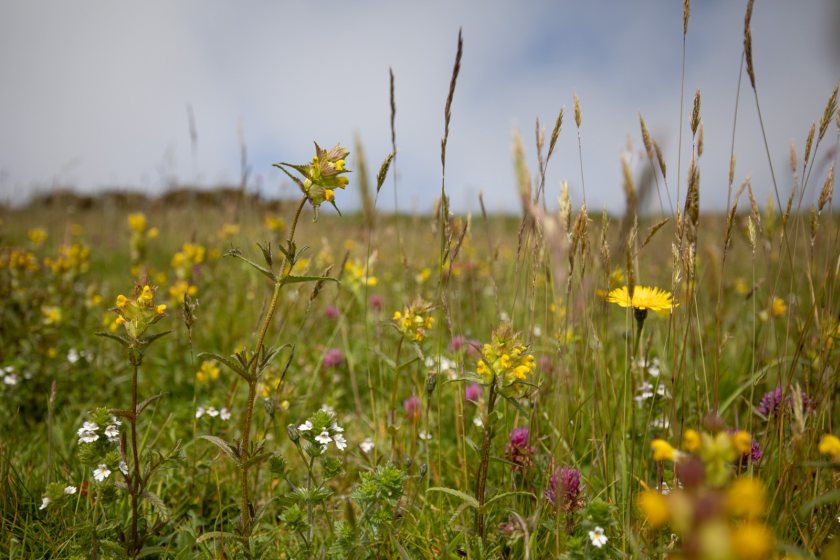
A Welsh tenant farmer is helping revive one of Wales’ rarest habitats after finding traditional hay meadows can improve livestock health and withstand drought.
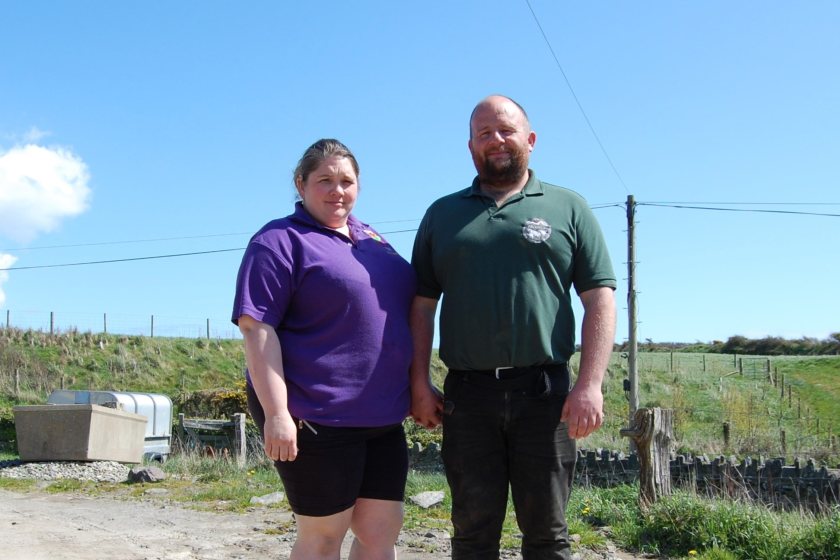
Carwyn Evans, who farms sheep and cattle at the National Trust’s Cwrt Farm on the Llyn peninsula, wanted to move away from intensive silage production and “do something different”.
By returning several silage fields to traditional species-rich hay meadows, he found his livestock benefited while the farm began contributing to the recovery of drought-resistant grasslands.
Working with ecologist Jo Porter as part of a pilot project for the new Sustainable Farming Scheme, Mr Evans found livestock grazing the meadows needed fewer medicinal wormers, cutting costs thanks to the natural anthelmintics found in the grassland.
The approach also echoes older farming traditions, when farms often kept a “cae meddyg/ ysbyty”, or medical/hospital field, where livestock could self-medicate.
Mr Evans said: “I used to think hay meadows were a waste of time and space, as we just wanted to make as much silage as possible.
“Now I see how they fit into the bigger picture - every part of the cycle needs looking after because there’s a knock-on effect, for example, pollinators, which are important on the farm.
“Farming and nature need each other. Without one, you won’t have the other.”
The work is helping bring the Llyn’s grasslands back from the brink.
Wales has lost 91% of its species-rich grasslands since the Second World War due to development and agricultural intensification, while on the Llyn the loss is thought to be closer to 99%.
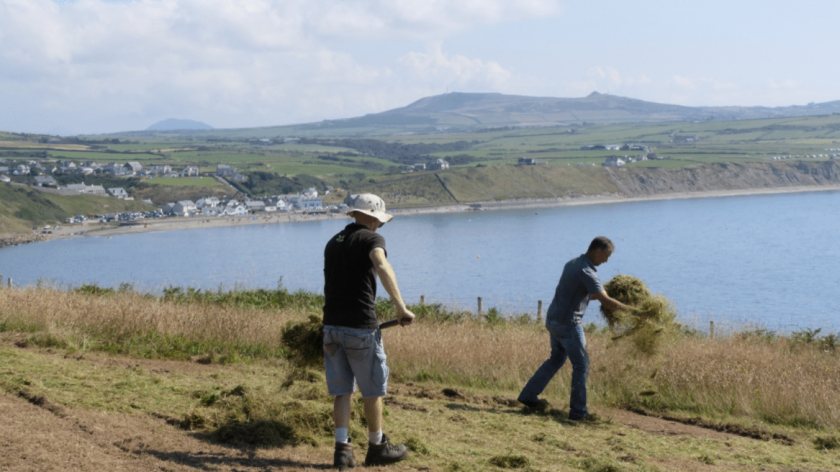
The decline has meant fewer flowers for pollinators, less food for birds, fewer wildlife habitats and greater vulnerability to drought and flooding.
Unlike silage fields, species-rich meadows are allowed to flower and set seed before being cut for hay and grazed over winter.
Used alongside faster-growing ryegrass or clover fields, Mr Evans found the restored meadows were more resilient in dry weather, staying green during hot summers as monoculture fields yellowed.
He added: “The hay itself is better for feeding the stock in winter and doesn’t need wrapping in plastic.
“It isn’t as good for fattening stock as ryegrass, but has good nutritional value.”
The scheme has also brought financial benefits, with Mr Evans receiving support through the project and now able to sell his meat at a higher grade.
His restored meadows are now acting as a donor site, sharing seed with depleted areas across the peninsula.
They form part of Dolydd Llyn, or Llyn Meadows, a community-wide meadow network led by Ms Porter.
Since launching in 2018, Dolydd Llyn has grown into an 80-strong network of landowners and farmers restoring silage fields, lawns, road verges, parts of a golf club and graveyards into species-rich grasslands to boost biodiversity and drought resilience.
Ms Porter said: “It started very organically through talking to neighbours.
“A lot of people have a house with a bit of land, and there’s a desire to do what they can for nature.
“I began to see how important these patches of land are, no matter how small - there’s so much fragmentation of habitat that every patch counts. They’re stepping stones for wildlife.”
The network continues to attract new members each year, including landowners who want to bring back flower-rich meadows and reduce mowing.
Ms Porter now advises new participants, with her time funded by Gwynedd Council through Welsh government funds.
With the right management, grasslands can support diverse fungi, rare plants such as orchids and rare birds including choughs.
The Llyn is home to a quarter of Wales’ chough population.
The work comes amid steep declines in flying insects, with number plate surveys showing a 55% fall in Wales over the past five years and a 78% drop across the UK over the past 20 years.
Ms Porter said many people still overlook the importance of unploughed wildflower meadows, which can hold more below-ground carbon than woodlands or agricultural fields.
She said: “People immediately think of planting trees, but not restoring grasslands.
“The rooting system in a meadow is incredible, with some species rooting down two metres.
“That gives a lot of resilience in the face of climate change or flooding.”
The growing network now includes Mynytho village green, the side of a rugby pitch and land managed by Pwllheli Town Council, which has seen rare orchid species return after changing its cutting practices.
Gwynedd Council is also trialling different management techniques on land it manages, including road verges.
Project manager Arwel Jones said the council had an important role in setting an example for people and nature.
He said: “[A road verge] is something people see all the time - historically, verges were cut too early, so the flowers didn’t bloom or seed.
“We’re now trialling different management techniques to increase wider diversity on council-managed land, while encouraging the same practices in towns and villages.”
Mr Jones said the restored patches were helping reconnect fragmented habitats across the peninsula, adding that “if everyone does something, it has a collective positive effect.”




