




A planning victory for free range
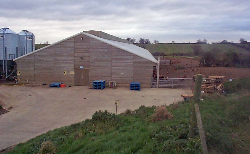
One man's battle to expand his laying unit has turned into a remarkable planning victory for free range.
Anthony Watchorn moved into the industry five years ago with a 12,000 bird shed at his Loodall Farm close to the village of Whissendine, near Melton Mowbray. Such has been the success of the venture that he decided on a major expansion by extending his first shed to accommodate 16,000 birds and to build another 16,000 bird building from scratch. Each shed would then be over 100 metres long and 20 metres wide.
But the site of the unit is just 250 metres from houses in the nearby village and residents had already made nine official complaints to the local council about flies.
Whissendine Residents Action Group (WRAG) mounted objections to the new development on the grounds of fly nuisance, smell, dust, the impact of the buildings on the character and appearance of the area and because of their fears that surface water from the sheds could exacerbate the chronic flooding problem that already exists in the village.
Rutland County Council turned down both applications—for the extension and the new shed. And at this point many people might have given up their expansion plans.
But Anthony Watchorn had already taken on Acorus Rural Property Services, the chartered surveyors and planning consultants that was formerly part of ADAS, and with the advice of the company's Brian Barrow he took the two refusals to appeal.
After a two day inquiry held earlier this summer the result has been such a complete victory for Mr Watchorn that the council has even been ordered to meet his full costs.
The Acorus experts arranged for a full Environmental Impact Assessment and even before the appeal hearing started the council had dropped the objections it had raised about smell, dust and the disposal of waste and water.
So as far as the inspector, Jonathan G. King, was concerned the major issue to be decided was whether the expanded unit would create an unacceptable fly nuisance to local residents. But, in his report on the hearing, he stressed that it was not for Mr Watchorn to show there would be no harm. It was for the Council to show there would be.
And, he concluded, it failed to do this. Officials did not carry out any kind of tracing survey on flies in local houses and did not even visit a nearby dairy farm to check it as a possible source.
Acorus called the respected expert Barbara Bell of ADAS who spelled out to the inquiry the many different sources of flies, that they may travel long distances and that that flies from poultry houses often carried mites which could be used to prove where they came from. But the Council had done no work on this.
"I have little confidence in the Council's investigations," said Mr King. "It seems to me that they have jumped to conclusion on the basis of inadequate information."
The Inspector had seen no evidence of large numbers of flies at the farm on a visit.
He also quoted from the latest Defra guidance on 'Statutory Nuisance from Insects and Artificial Light' which states that most insect nuisance can be minimised by proper management and treatment.
"I do not doubt that some residents have suffered from flies in recent years and that this can be an unpleasant and upsetting experience," said Mr King. "I do not wish to minimise their concerns. Nor do I question their genuinely held belief that flies emanate from the poultry unit. However it is important that the source of any fly problem should be established if the evidence is to be used against the proposals."
Similarly he concluded that no evidence had been brought to show there had been a dust problem associated with the existing building.
He accepted the EIA evidence that the unit would give rise to little smell and went on to say "I do not think it unreasonable for those living in a rural community to experience 'rural' smells from time to time. It is part and parcel of rural life."
He also decided that farm buildings form an integral part of the local character of the attractive rolling countryside in which Loodall Farm is set. So the poultry houses "though large and utilitarian in appearance" would be of a type commonly found in rural areas so their impact on the character and appearance of the area was not sufficient reason to refuse planning permission.
And the issue of drainage was covered by Mr Watchorn's agreement to develop a holding system for large quantities of water.
Mr King not only granted approval to both planning applications he ordered the Council to pay Mr Watchorn's costs because he judged that it had behaved unreasonably in refusing permission for reasons which were not backed up with proper evidence.
Nevertheless Mr Watchorn has to comply with a string of conditions which includes the stipulation that the buildings cannot be cleaned out more often than once every 54 weeks and never on a Saturday, Sunday or Bank Holiday.
The Loodall Farm victory also involved a key new planning tactic. When the applications became caught up in the year-long appeals procedure Mr Watchorn, under Acorus advice, asked the Council for a Certificate of Lawfulness to erect mobiles on the same site. This was granted. So by the time of the appeal hearing everyone involved was aware that if the planning applications were turned down then just as many hens could end up on the unit anyway.
Brian Barrow told the Ranger: "We were delighted with the outcome particularly as this was our second successful appeal case this year concerning a free range poultry unit and both have had successful cost claims."
More free range news at www.theranger.co.uk




