

AI job fears push young people towards hands-on careers, survey finds
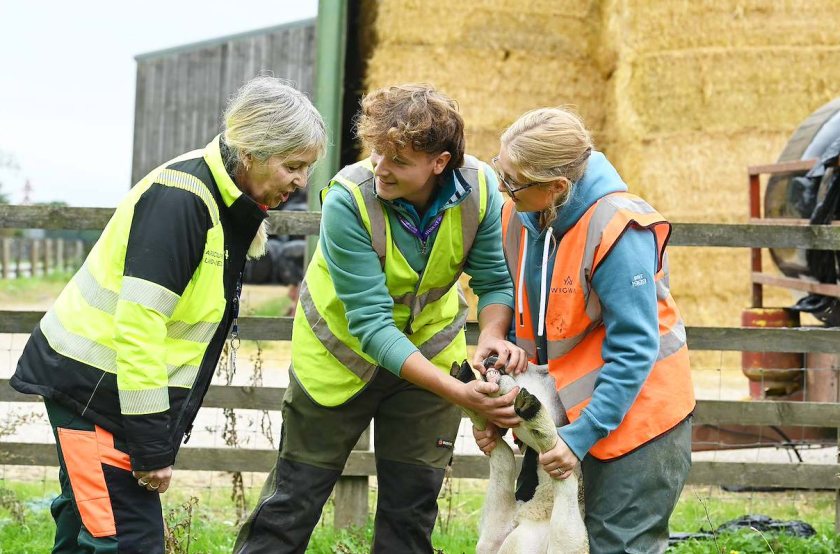
Fears over artificial intelligence are driving interest in hands-on careers, with 77% of parents worried AI could affect their children's future job prospects, new research reveals.
A nationwide survey commissioned by East Yorkshire's Bishop Burton College found that 66% of parents were considering vocational career routes for their children because of AI.
Almost half of young people surveyed (46%) said the technology had made them consider pursuing more practical, hands-on work.
The OnePoll research, involving 4,000 UK parents and secondary school children aged 11 to 16, highlights growing uncertainty over how automation could reshape employment opportunities.
While the findings cover vocational careers generally, agricultural students believe farming offers examples of work where practical skills and human judgement remain essential.
Katy Cranston, a second-year T Level student studying livestock production at Bishop Burton College, said AI could support farmers but was unlikely to replace many everyday tasks.
“I can see why people are worried about AI. I think it’s a great tool, but AI can’t deliver a lamb, can it?” she said.
“On my T Level, I’m learning what is needed to succeed in my career choice and I can see how technology assists farming, but I also know where its limits are.”
The comments reflect a wider debate about the future of agricultural employment as artificial intelligence becomes increasingly capable of performing tasks traditionally carried out by people.
Farming is already adopting technologies such as autonomous tractors, AI-powered crop recognition and precision spraying systems to improve efficiency and reduce input use.
However, these developments are also changing the skills required in agriculture, increasing the importance of technical knowledge alongside traditional farming experience.
Louis Horstwood, a second-year student studying crop and plant production, believes practical problem-solving will remain essential despite advances in technology.
“Let’s face it, AI can’t change the points on a plough. It might let you know there is a problem with them, but if the subsoil breaks them and you’re out in a field, it won’t be AI fixing it – it will be me.”
The survey also revealed wider concerns about the changing jobs market, particularly among families considering alternatives to university.
Across the UK, 67% of young people questioned said they were likely to consider an apprenticeship instead of university because of concerns over student debt.
Meanwhile, 45% of parents said the rise of AI had prompted them to consider moving into a more vocational career themselves.
The findings come amid renewed government efforts to give practical and technical education greater recognition alongside traditional academic qualifications.
Proposals include widening access to technical education from age 14, combining classroom learning with practical training, work experience and stronger links to employers.
Bishop Burton College, which has provided vocational education for more than 70 years, offers agricultural courses alongside training in engineering, horticulture and other land-based industries.
Its agricultural teaching includes emerging technologies such as AI-assisted crop monitoring and autonomous machinery, reflecting the industry's increasing reliance on digital systems.
College Principal and Chief Executive Danny Metters said technological change should not come at the expense of practical training.
“But technology doesn’t remove the need for skilled people. Whether someone is caring for an animal, building a wall, repairing machinery, working with a horse or supporting another person, there are practical skills, professional judgement and human qualities involved that cannot simply be automated.”
While AI is already transforming aspects of farming, its growing use is likely to reshape agricultural roles rather than simply remove the need for skilled workers.
The survey suggests concerns about automation are influencing attitudes towards vocational education, although it does not establish whether this interest will translate into more young people entering agriculture.
For the farming industry, the challenge will be attracting new entrants while ensuring they develop both the practical experience and technological skills needed for an increasingly automated future.