




'Extremely unwell': Sheep farmer calls for increased sepsis awareness
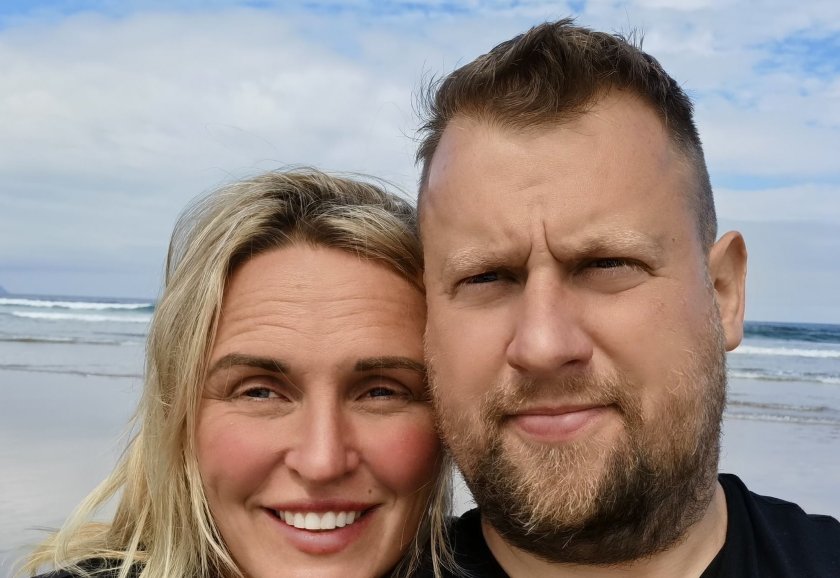
A sheep farmer is calling for increased awareness of sepsis after his remote rural location meant an ambulance would take five hours to reach him with medical help.
Last year, Northumberland farmer Paul Coulson was spending time with his wife Kirsty and children when he started feeling unwell.
A trip to A&E saw him initially discharged with a UTI diagnosis but his condition deteriorated rapidly over the next few hours.
Paul said: “During the early hours of Sunday morning I began feeling extremely unwell - shivering, shaking, vomiting and sweating profusely."
After an hour, Kirsty called for an ambulance and when the paramedic arrived, Paul was told he either had sepsis or meningitis, and that he needed urgent medical attention.
Paul recalled: “The paramedic gave me fluids and anti-sickness medication. As he was a first responder he called for an ambulance to take me to the Royal Victoria Infirmary in Newcastle.
"However, the call handler told him it would be a five hour wait before an ambulance could come to our rural location.”
Luckily, the paramedic was able to stabilise Paul enough for Kirsty to drive him the hour-long journey to the nearest hospital, where he was immediately placed on a drip and strong antibiotics.
That evening Paul was told he had sepsis: “I was really surprised, shocked and worried," he said, "My family were all very concerned but we decided not to tell our three young children that I was in hospital as we wanted to keep things as normal as possible for them.”
Sepsis takes the lives of approximately five people every hour in the UK.
It occurs when the body’s response to an infection spirals rapidly out of control, injuring its own tissues and organs which can result in multiple organ failure and death.
Paul was kept in hospital for a week before being discharged with antibiotics but he continued to feel unwell.
“I had no appetite, continued to sweat - especially at night - and could hardly walk. I felt like I’d been hit by a bus," he said.
“As the weeks went on I was back and forth to my GP as my body just wouldn’t recover. After months of doctor’s appointments and tests they diagnosed me with post sepsis chronic fatigue and chronic migraines, which had been an ongoing issue since I had meningitis in 2015.
“Unfortunately the infection had really taken its toll on my body. I still haven’t recovered fully, and I continue to need medication to manage the pain - I’ve been unwell now for 17 months.
"Without any real treatment for the post sepsis condition, it’s just something I have to manage and live with. Thankfully I’m still here though.”
Colin Graham, chief operating officer at FEAT, the only UK charity dedicated to supporting sepsis research, said sepsis was the number one cause of preventable death in the world.
He said farmers especially can be vulnerable to sepsis given the likelihood of picking up cuts and grazes through their work, which can become infected and potentially lead to sepsis.
“Add to that a rural location where medical attention may be harder to access and it makes it all the more important to know the symptoms, recognise them quickly and act fast to get treatment," he said.
"The faster sepsis is spotted, the more chance the patient has of a positive outcome.”
Paul added: "I dread ever having sepsis again. It was without doubt the worst experience of my life. I have never felt so unwell, but I’m very grateful to still be here even if I don’t have the energy and health I would wish for.
“If I had to share just one message I would say this: if there’s any doubt don’t delay, get to hospital. Time is your enemy.
"Sepsis can affect anyone not just the elderly, it seems to be a misconception that young fit people won’t get sepsis. You can. I did. I survived.”




