




'Grey belt' policy puts prime farmland in firing line, charity warns
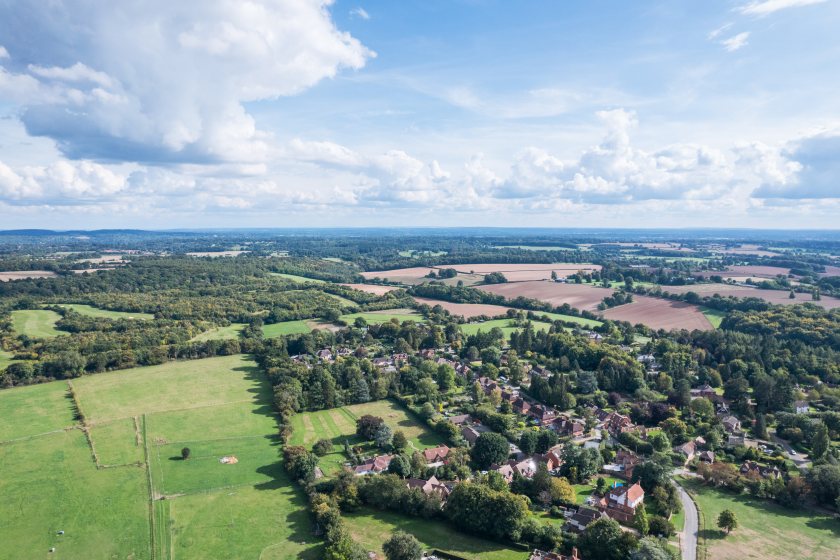
England’s best farmland is increasingly being lined up for housing under the government’s ‘grey belt’ policy, with new CPRE research showing that land vital to farmers and food production is being released for development rather than the derelict sites ministers promised.
The countryside charity’s analysis finds that 88% of homes approved under the grey-belt rules are earmarked for previously undeveloped green belt countryside, much of it productive farmland central to local farming economies.
Since the policy’s launch in December 2024, government planning inspectors have approved 13 major schemes across the green belt, frequently overruling councils and farming communities who objected to the loss of agricultural land.
Of the 1,250 homes involved, almost nine in ten would sit on land that has never been built on, including Grade 1 farmland that supports profitable farm businesses and long-term food security.
The government had presented the grey belt as a tool for unlocking underused brownfield plots. Sir Keir Starmer described such land in April 2024 as “poor-quality scrubland, mothballed on the outskirts of town”, and promised Labour would “prioritise ugly, disused grey belt land” such as old petrol stations and car parks.
CPRE says the evidence now shows something very different in practice, with agricultural landscapes bearing the brunt of the policy. One case in Tonbridge, Kent, involves 57 homes to be built on Grade 1 farmland—some of the most productive soil in the country. Local farming voices warned that the loss would undermine food production capacity and further squeeze viable farm holdings.
In Castle Point, Essex, inspectors approved 47 homes on land forming part of a Local Wildlife Site that farmers say contributes to the ecological networks supporting their land management practices. Although both sites were previously protected by green belt status, they were reclassified as grey belt and approved despite strong rural opposition.
CPRE says these decisions reveal a growing and unnecessary risk to farming landscapes at a time when brownfield land could supply far more of England’s housing needs.
Its recent State of Brownfield report identified capacity for 1.4 million homes on previously developed sites—almost half already with planning permission. The charity argues that pursuing undeveloped countryside, particularly farmland, is “a choice, not a necessity”.
Roger Mortlock, CPRE’s chief executive, warned that the government’s approach represents “an existential threat to the protections of the green belt”.
He said the grey-belt policy is “vague, subjective and misleading to the public”, adding that it has benefited large housebuilders while farmers and rural communities shoulder the consequences. Across CPRE’s local branches, he said, councils are reporting growing pressure to release farmland simply to meet revised housing targets.
Emma Marrington, CPRE’s policy lead, emphasised that the green belt serves almost 30 million people as “the countryside next door”, including tens of thousands of farmers whose businesses depend on high-quality soils, intact wildlife corridors and stable land-use protections.
These areas, she noted, help deliver the government’s goal of protecting 30% of land for nature by 2030. “Once it’s lost, it’s lost for good,” she said—an issue of particular concern to those working the land.
CPRE is calling on ministers to tighten the definition of grey belt so that it applies only to genuinely previously developed land, protecting food-producing farmland and wildlife habitats from speculative development. The charity also wants legally binding targets for affordable and socially rented housing, with greater accountability for developers who fail to deliver.
For farmers, the findings highlight a growing conflict between national housing ambitions and the long-term protection of the land that underpins British food production.




