




Bringing back the meadows - going native!
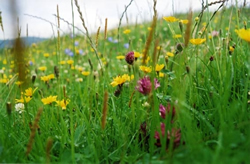
Now that the panic of registering under the Single Payment Scheme is over, some farmers will be considering whether to enter the Higher Level Stewardship Scheme.
One of the options available is to consider restoring native wild flower grassland – a habitat which has disappeared over much of the countryside. This option will be available on a selective basis where land is in the right area and where physical conditions on the site appear suitable for grassland restoration. Defra will fund up to 100% of seed costs where projects qualify, but the seed must be source-identified and of appropriate origin.
One of the challenges in having a successful scheme is knowing what seed to use and where to get it from. In the past many mistakes have been made, as standard "ESA" or "Stewardship" mixes have been sown. These seed mixes have often proved inappropriate, containing grass and fodder varieties of wild flowers. These types of mixes will be ineligible for the 100% grant.
Fortunately, new advice is at hand from Flora locale, the wild-plant restoration charity, which has produced a set of Advisory Notes on restoring native grassland. These describe some of the techniques that can be used, where to obtain seed from and how wild seed should be sown.
Liz Manley, Conservation Manager at Flora locale says, "Care should be taken in obtaining seed – this should be source-identified from known locations. If restoring grassland close to nature reserves or in ecologically sensitive areas, the seed should be of local or regional origin. It is also imperative that the species sown, match the grassland type that is to be established. This will vary, whether the land is on chalk or in a clay vale. The site location in Britain is also important – different types of grassland are found in upland areas, the south and on the western seaboard, while coastal grassland is particularly special".
Seed for native grassland projects can be obtained in a variety of ways, including brush-harvesting or using green hay from an existing meadow, or buying crop-grown seed from a grower who can provide information on the region or county of origin of their stock.
Seed donor sites wanted! Flora locale is currently producing a register of potential seed donor sites that could be harvested to supply farmers with wild seed. Qualifying sites must be accessible, unsown grasslands rich in wildflowers, and ungrazed between April and early August. Selected information on donor sites will be made available to Defra project officers and harvesting contractors. Owners of sites that are harvested can receive a payment for seed (if seed is brush harvested, meadows can be cut for hay afterwards).
Go native awards
This award scheme is open to any land manager who has supervised a wild-plant restoration project that has used source-identified native flora. New native woods, wildflower grassland and wetland projects are among those eligible.
Tips on buying seed for native wild flower grassland restoration
· Use a specialist grower or supplier who can guarantee the county of seed origin – see Flora locale's website for details.
· Consider obtaining wild seed from a supplier or contractor who can undertake wild-seed harvesting from a local meadow or other native grassland.
· Collect seed by hand, with the help of volunteers, from local road verges, churchyards and other places – one Norfolk farmer has successfully established native chalk grassland using this technique, using a low sowing rate of 3kg/ha.
The following species should not be included in crop-grown seed mixes:
· Cocksfoot
· Perennial Rye-grass
· Creeping Red Fescue
· Chewings Fescue
· Meadow Fescue
· White Clover
· Fodder varieties of wild flowers, e.g. Bird's-foot Trefoil, Kidney Vetch, Red Clover, Fodder Burnet – only British native varieties should be included
· Annual species, such as Field Poppy, Cornflower, Corn Marigold and Corn Cockle – these will die out after a year so it is a waste of money to sow them.




