




Damaged, waterlogged soil improved without soil disturbance
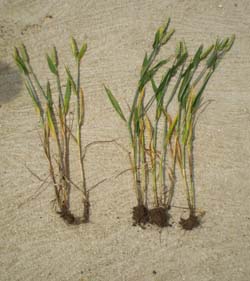
Good news for the UK's beleaguered farmers may have arrived in the form of a product new to the UK, promoted as a means of actively increasing oxygen in waterlogged soils without disturbing the soil. Plocher Soil Activator helps soils recover from waterlogged conditions and the application of anaerobic organic matter. Stimulating aerobic microbial activity improves the "nature" of soil, building humus levels and fertility so that crops will grow stronger and healthier, and have a better chance when conditions improve.
Charlotte Wilson of Swift Nature, PLOCHER's UK distributor, states, "Nature is very clever – even though we're suffering from atrocious weather this season. Because Plocher Soil Activator increases oxygen levels at the root, stimulating aerobic microbial activity and actively building humus, this helps to open up the soil pores so that excess water can drain away more efficiently. However, in the drought conditions we experienced last year, increased humus levels prevented soils from drying-out with one user telling me how PLOCHER-treated wheat was still green compared with the untreated. This makes it a win-win situation for our increasingly unpredictable climate."
Philip Meadley at Grange Farm, East Yorkshire first trialled Plocher in 2005-6 on half a 15ha field of Solstice first wheat. His soil type is medium clay loam. He has continued with the programme on Einstein second wheat.
Slightly stronger root growth was evident in the first year of use and the improvement is much more noticeable this year. Wheat samples from the treated and untreated areas of the field on 10 July 2007, illustrated that roots of the PLOCHER-treated wheat were clinging to the soil, providing the plants with a stronger, more secure hold in the soil. Observations also showed there was almost no lean in PLOCHER-treated wheat whereas in untreated wheat, there was a definite lean, indicating that lodging is less of a problem. Finally, PLOCHER-treated samples were a taller, stronger, fuller and greener series of plants each with 2+ tillers, when compared to the untreated samples.
Philip Meadley says, "There is clearly a difference between the PLOCHER-treated wheat and untreated wheat at this stage. It will be interesting to see the results after harvest to assess yield and quality comparisons."
Ideally, it is applied 2-4 weeks prior to drilling. It is usually applied through the sprayer. Alternatively, it can be applied to any type of organic matter which is then spread or it can be sprayed at the same time as spreading to reduce the number of passes. It can be used at a rate of 100g-500g/ha, however the manufacturer recommends 200g/ha for the first application and 100g/ha in subsequent years.
Plocher Soil Activator is one weapon in the armoury used to improve crop production and protection. It is commonly considered to be the most important product because it prepares the soil for the seed.
Other improvements can be expected when using PLOCHER products: improved soil hygiene resulting in fewer pest and disease incidents, and increases in yield and crop quality are often experienced. With the recommended reductions in inputs of 30% in year one and 50% in year two, due to PLOCHER products increasing the efficiency of fertilisers, pesticides and fungicides.




