




Delegates back use of GM technology
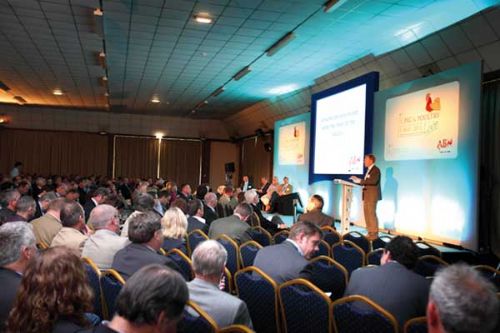
Delegates at Pig and Poultry Live voiced their support for GM during the event’s headline debate on feed.
Some 93 per cent of delegates backed the use of GM technology in an electronic poll and 77 per cent felt that consumers would accept the use of GM in food. But they were much more cautious about a return to the use of meat and bonemeal - now known as processed animal protein (PAP).
A number of delegates expressed their fear that its past connections could affect consumer confidence. Only 39 per cent of delegates indicated their support for the use of PAP during electronic polling, their reservations were echoed by a small group of consumers interviewed for Pig and Poultry Live. They clearly voiced their reluctance to accept PAP.
However, whilst these consumers were unhappy about meat and bonemeal, most of them seemed ready to accept the benefits of GM. And if their views reflect those of other consumers, it could be an encouraging sign for egg producers.
They and other members of the poultry sector are the only farmers still required to use non-GM ingredients in their feed.
The requirement is not statutory, but is imposed by most UK supermarkets. Many in the industry are looking for supermarkets to drop this requirement to ease the rising cost of feed. Consumer opinion could help.
James Hook of P.D. Hook (Hatcheries) Ltd, said during the debate that the insistence on non-GM was costing poultry farmers about ’5 per tonne on feed and John Campbell of Glenrath Farms said the industry needed to speak with one voice to get the issue resolved. ’We are the only agricultural sector not allowed to sell our product with GM. If this debate is ended today with the industry trying to be united and making a big case I am sure there is no scientific reason to ban it.’
John said that the egg industry was going through huge changes at the moment. ’The whole intensive sector is being revolutionised and we are now told that southern European countries are not going to make the deadline. The industry is in an absolute mess,’ he said. ’All other farm animals ’ beef, sheep and milk ’ are allowed to use this stuff.’ John said he was not convinced that PAP was the right way to go, but there was no clear argument to ban GM. ’I think we should go hell for leather for that.’
The European Union has come in for criticism in the past for delays in approving new GM crop varieties. That, together with zero tolerance of cross-contamination, has resulted in cargoes of soya from America being turned away from European shores.
Soya is an important constituent of poultry feed and the vast majority of soya now being grown is GM soya. A representative of the UK’s Food Standards Agency attending the Pig and Poultry Live debate was critical of certain European Union states for blocking progress on the use of GM for political reasons and contrary to scientific advice.
He said that all new GM varieties awaiting approval had to be assessed by the European Food Safety Authority (EFSA). ’All the ones that I am aware of have been given the thumbs-up. They are as safe as their conventional alternatives. Despite this, whenever the European Union puts forward a proposal for legislation there is usually a blocking minority. It is purely on political grounds. The rules are fine, it’s the behaviour of certain member states. When EFSA says it’s safe, on behalf of the UK, I vote in favour,’ he said. ’There is a big sustainability argument, but also food security looking ahead 20 or 30 years.’ He said the United States had been using GM for 30 years and he had never come across a grave saying anyone had died as a result of eating it.
Tim Rymer of JSR Farming Group was also highly critical of the EU. Tim said he was an enthusiastic supporter of GM. ’It’s astonishing, really, that the billionth hectare of GM has been grown in 2010 and you look at the tortuous approval process in Europe in introducing new varieties that we can incorporate into feed and you can only just see trouble ahead. I think as far as Europe is concerned it’s a disgrace. The fact that they haven’t managed to appoint a scientific adviser in 18 months proves the point. It’s akin to fiddling while Rome burns.’
Tim said he was reluctant to see a return to meat and bonemeal. He said agriculture had done a great deal of work to restore the confidence of consumers and he would not like to risk that by using processed animal protein. He said not using it was an opportunity to put blue clear water between the UK and Europe, where PAP was used. A number of the consumers interviewed for the debate indicated that they would be more likely to buy only British food after being told that PAP was not used in the UK but was used abroad.
Rather than dismissing PAP completely, NFU president Peter Kendall said he would like to explain the science behind the possible use of meat and bonemeal. He said there was the advantage of sustainability. Rosemary Moon, a food writer and consultant with Waitrose, said she could see advantages in using PAP, although she said it would probably need re-branding under another name if consumers were ever to accept it. ’To me if you can stop bringing a feed product from the other side of the world and use waste product that is readily available that is a no brainer.’
David Gibson said that there would have to be a great deal of education if PAP was to be introduced, otherwise the result would simply be headlines in the Daily Mail and other national newspapers. On GM, he said that if we were to feed the world’s growing population there would be more need for science. ’How we use that science is going to be key,’ he said.
The Royal Agricultural Society of England said that more than 500 delegates attended Pig and Poultry Live this year. A total of 70 exhibitors took stands at the event.




