




Egg producer confidence improves as fewer plan to cut or quit
UK egg producers are heading into 2026 with confidence rebuilding and fears of contraction easing sharply, even as concerns over imports and regulation continue to weigh on the sector.
The latest Confidence Survey by the British Free Range Egg Producers Association (BFREPA) shows sentiment improving across both short and medium-term outlooks, marking a clear shift away from retrenchment after a difficult period for the industry.
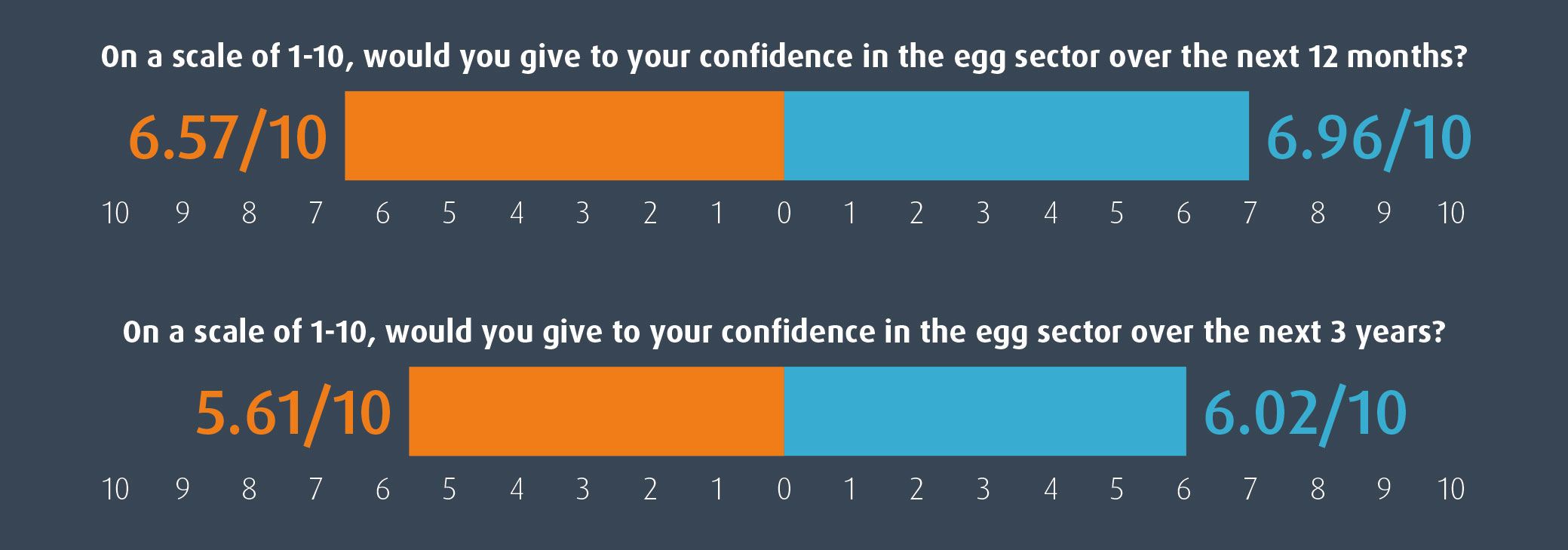
Producers rated their confidence in the egg sector over the next 12 months at just under seven out of ten in 2026, up from the mid-sixes a year earlier. Confidence over the next three years also strengthened, rising from the mid-fives in 2025 to just over six.
More striking than the headline scores, however, is the collapse in exit intentions. The proportion of producers planning to stop producing eggs altogether fell from 7% in 2025 to just 2.5% in 2026, while those expecting to reduce production dropped from around one in ten to fewer than 2%.
These figures suggest the sector is no longer bracing for contraction. Instead, producers appear to be settling into a period of consolidation, focused on stability rather than expansion.
That improvement comes after a challenging few years for egg producers, shaped by avian influenza disruption, volatile feed and energy costs, labour pressures and prolonged debate around standards, imports and regulation.
Against that backdrop, even a modest rise in confidence is notable and indicates many producers believe the most acute shocks may now be behind them.
Production intentions reinforce that picture. In 2026, just under 30% of respondents said they plan to increase production over the next three years, broadly similar to last year.
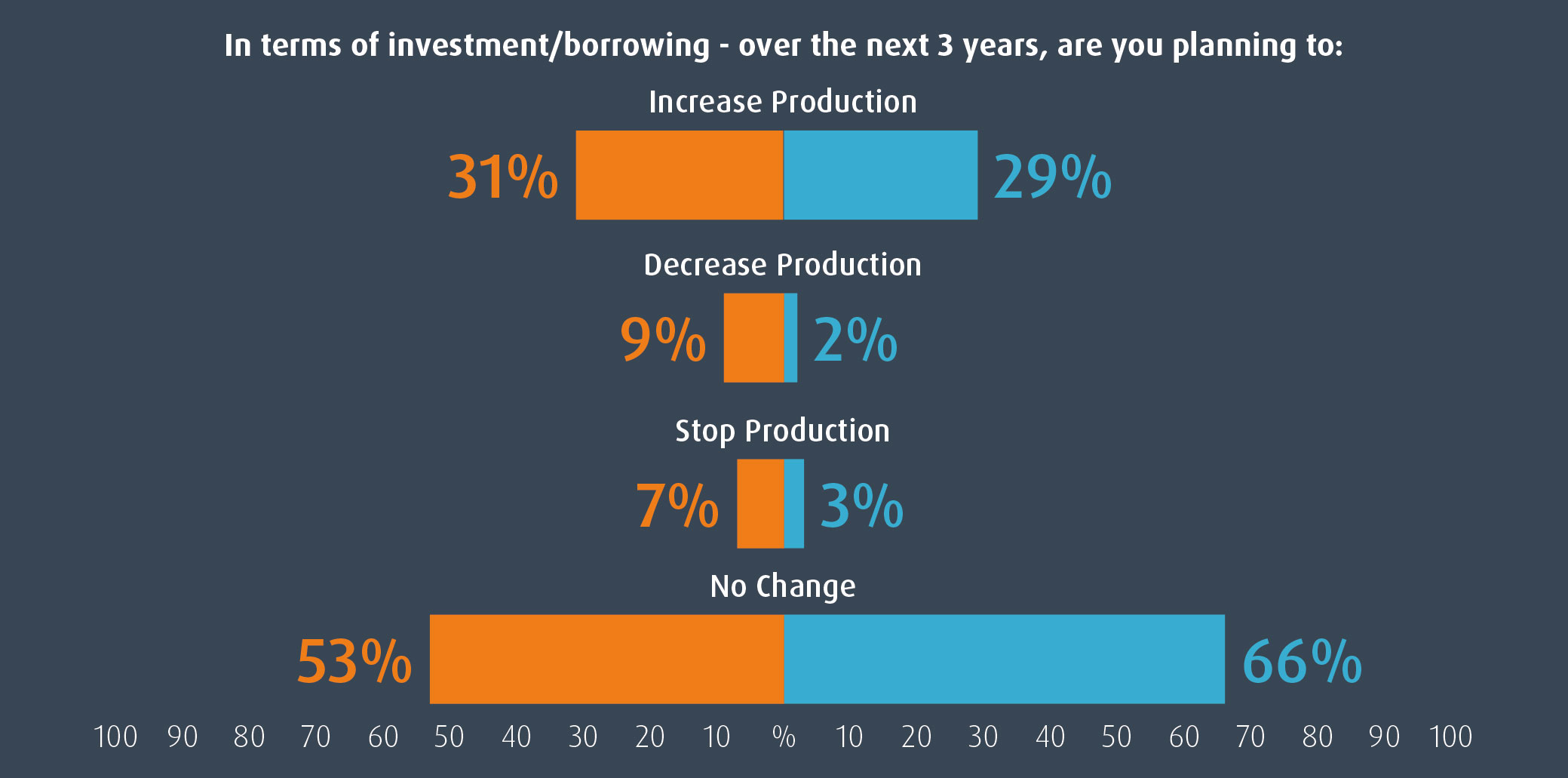
At the same time, around two thirds of producers said they expect to maintain current production levels, up from just over half in 2025. For many businesses, the priority appears to be making existing systems work efficiently rather than committing to new sheds, higher borrowing or increased bird numbers.
This wait-and-see stance is closely linked to persistent policy concerns. Worry about government regulation remains high, with 2026 scores still tilted towards the concerned end of the scale and broadly in line with last year.
Imports and trade deals have emerged as a particularly significant source of unease. Producers rated their concern about imports very highly, reflecting long-standing fears that lower-standard eggs and egg products could undercut UK production.
For a sector that has invested heavily in free-range systems and higher welfare outcomes, the risk of being undercut by cheaper imports remains a powerful brake on confidence and longer-term investment decisions.
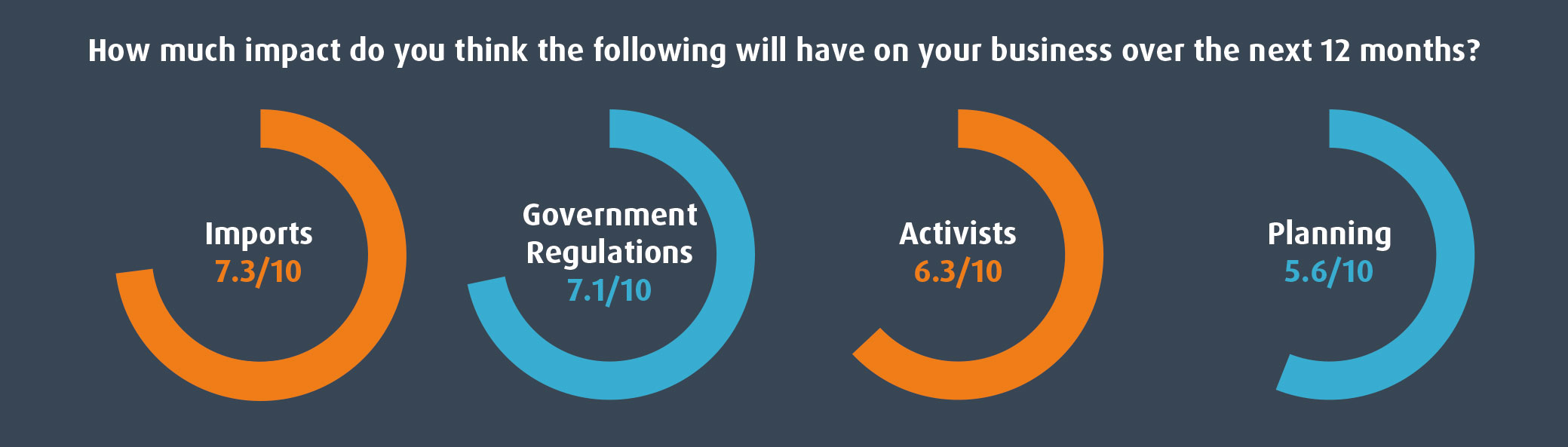
Animal rights activism was rated as a lesser, though still notable, concern, suggesting a background pressure rather than a decisive driver of change.
Planning permission revealed a more divided picture. While the average response sat close to neutral, the wide spread of answers shows that planning remains a serious barrier for some producers, even if it presents little difficulty for others. This suggests that targeted improvements could unlock investment for a subset of the sector, rather than transforming sentiment across the board.
Overall, the survey paints a picture of an industry regaining its balance. Confidence is higher than a year ago, particularly beyond the immediate term, and the sharp fall in those planning to reduce or exit production is encouraging.
However, the dominance of “no change” responses underlines that this is not yet a sector ready to push ahead. Instead, producers appear focused on resilience, cost control and managing risk while awaiting greater clarity on regulation, trade and longer-term policy.
For the UK egg sector in 2026, confidence is best described as cautious but constructive. The mood is no longer defensive, but neither is it exuberant. If stability in input costs continues and policy signals become clearer, the underlying improvement in sentiment could yet translate into renewed investment. For now, patience remains the order of the day.
Anyone within the egg sector looking to keep up to date with the latest trends, data and policy developments can join BFREPA and receive the Ranger magazine each month. More information is available at bfrepa.co.uk/join-bfrepa.




