




EU softens ban on illegal cage eggs for processing
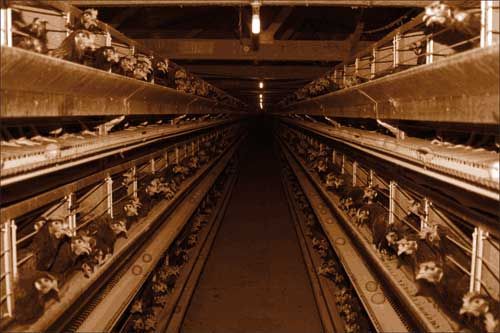
A European commissioner has openly conceded that cage eggs will continue to be produced in some European Union states after the EU’s ban on conventional cages comes into force at the beginning of next year. And he says that those eggs should be allowed to go for processing rather than be destroyed.
John Dalli, European Commissioner for Health and Consumer Policy, told the European Parliament’s Agriculture and Rural Development Committee that the European Commission did not intend to postpone the deadline for the cage ban, which falls on January 1 2012. "Investments and efforts already made, as well as consumer trust, must not be undermined," he said.
But he said the European Commission did not want to force producers who did not meet the deadline to destroy their eggs. He said they should be allowed to sell them to industrial processors, in their own countries. They should not be sold for the retail market, he said. This would ensure that those who complied with the conventional cage ban would receive a premium price for their eggs and protect them from the threat of cheap imports, although the commissioner said it was unclear whether such a compromise was compatible with EU legislation. He said the Commission would work with EU governments to try to reach a solution.
The British Egg Industry Council has estimated that as much as a quarter of the EU laying flock will still be in conventional cages when the ban comes into force in January. The European Commission has now confirmed that Bulgaria, Cyprus, France, Poland, Portugal, Romania and Belgium have all said they do not expect to be fully compliant by the deadline. As we reported last month, the Ranger has received confirmation directly from the Belgian government that it will allow non-compliant producers an extra six months to meet the requirements of the cage ban. A spokesman for the Belgian ministry involved in implementing the new EU rules told the Ranger that existing producers who had so far failed to comply with the requirements of the cage ban would be given until July 1 next year to abide by the EU directive. He said that both shell and liquid egg from these units would only be allowed to be traded within Belgium and producers would not be allowed to continue with the banned conventional laying cages beyond July 1.
Commissioner Dalli told the Agriculture Committee that another five countries had failed to provide the European Commission with any data on their level of compliance. Those states were Hungary, Italy, Latvia, Spain and Greece.
He said that the Commission would send inspectors to selected member states from January to assess their compliance with the cage ban and would not hesitate to start infringement procedures where appropriate in 2012, but this has been dismissed as a wholly inadequate response by some MEPs.
Stuart Agnew, UKIP MEP for East Anglia and a free range egg producer himself, said that the Commission was abandoning British egg producers by making no serious attempt to ensure that the battery cage ban would be properly enforced or that consumers would be made aware that they were buying battery eggs after January 1.
"British egg producers have been completely let down," he said. "All the Commissioner has done is to promise that an inspectorate will be created and that infraction proceedings will be started against non-compliant countries. These measures will be of little or no help because, firstly, the inspectorate will hardly know where to start as no fewer than five member states, Hungary, Italy, Latvia, Spain and Greece have to date provided the Commission with absolutely no information about their efforts to comply with the legislation. Secondly, infraction proceedings are very long winded and may eventually produce fines that these countries are likely to regard as a ’licence fee’ to allow them to go on producing battery eggs."
He said, "Worse still, Mr Dalli told us that it is the responsibility of ’member states to ensure compliance, not the Commission’, which is a total abrogation of responsibility for legislation it generated. This effectively means that British egg producers, who have invested £400 million of their own money to comply with the ban, are being abandoned and many could go out of business in the face of unfair competition from battery egg producers in other EU member states. It becomes more than ever vital that the UK Government takes urgent steps to ensure that imported eggs are legal."
After listening to John Dalli, Scottish National Party MEP Alyn Smith called for the European Commission to allow individual member states to close their borders to illegal and sub-standard eggs, given that there would be "such a degree of non-compliance."
He said, "Today’s presentation by Commissioner Dalli has underlined my concerns from over one year ago that any action from the Commission will be too little, and too late.
"The Commission’s infraction proceedings will take too much time, will not punish the illegal producers and will not answer the question of what will happen to illegal eggs on 1st January 2012. In a time of economic crisis, to trash all illegal eggs is simply unconscionable so I welcome the Commissioner’s honesty, especially on his preference for a ban on the movement of these illegal eggs from their country of origin, and their use purely for production, not consumption, and the hope that this lower value of these eggs will force the change to compliant systems. We cannot allow Scottish egg producers to be undercut by illegal, imported eggs. We must be allowed to close our borders and I await with interest the Commission’s discussions on the possible legal basis for this move."
He said there had to be a direct economic incentive for the changeover to be made, otherwise Scottish farmers would lose out. "The Commission must remain firm on the ban and they must increase their inspections in non-compliant member states. If they allow non-implementation of this regulation then it is reasonable to wonder which other regulations will be next. Would there be similar hand-wringing from the Commission if the restrictions on sow stalls for pork producers, or even the EID regulations, were not met by our farmers?"
The Government here in the United Kingdom, along with governments of other EU states whose egg producers will comply with the cage ban, has been pressing for the new regulations to be enforced by the Commission. It is feared that if eggs continue to be produced illegally they could find their way onto the UK market, unfairly undercutting British egg producers who have invested large sums of money to ensure that they will comply with the new rules.
"There must be strong and concerted action on the Commission between now and the end of December if our farmers in Scotland are not going to face a real struggle come January. It is time that the Commission stood up for all of those farmers who have invested and complied with this legislation, and for the public who have awaited this ban for more than a decade."




