




Food price controls could heap pressure on British farms, industry warns
Family farms could face growing financial pressure under government plans to curb supermarket food price rises, industry leaders have warned.
Ministers are understood to be urging supermarkets to limit price increases on key grocery staples such as eggs, bread and milk in exchange for looser regulation.
According to retail industry sources, the proposals could involve voluntary agreements to freeze prices on selected products while easing packaging requirements and potentially delaying planned healthy food rules.
The plans have triggered concern across the food chain, with retailers and producers warning that rising costs cannot continue to be absorbed by suppliers and farmers.
The British Retail Consortium (BRC) dismissed the proposals as “1970s style price controls”, warning retailers could be forced to sell some products at a loss.
One retailer said ministers should focus instead on reducing wider cost burdens across the food supply chain.
“Ultimately what [the government] should do is stop all the other tax burdens and the prices will come down,” the retailer said.
The proposals come at a difficult time for the agri-food sector, with businesses already facing rising labour costs, employers’ National Insurance contributions, energy prices and volatile commodity markets.
Food inflation currently stands at 3.7%, but some industry groups have warned price rises could approach 10% by the end of the year as supply chain costs continue to escalate.
Industry figures say recent geopolitical instability has added further strain.
Fertiliser and animal feed prices have risen sharply following disruption to shipping routes through the Strait of Hormuz during the US-Israel conflict with Iran.
The debate has intensified concerns over who ultimately absorbs rising food production costs, with industry leaders warning that pressure to hold down supermarket prices risks squeezing farmgate returns.
The proposals have caused particular concern within the egg sector.
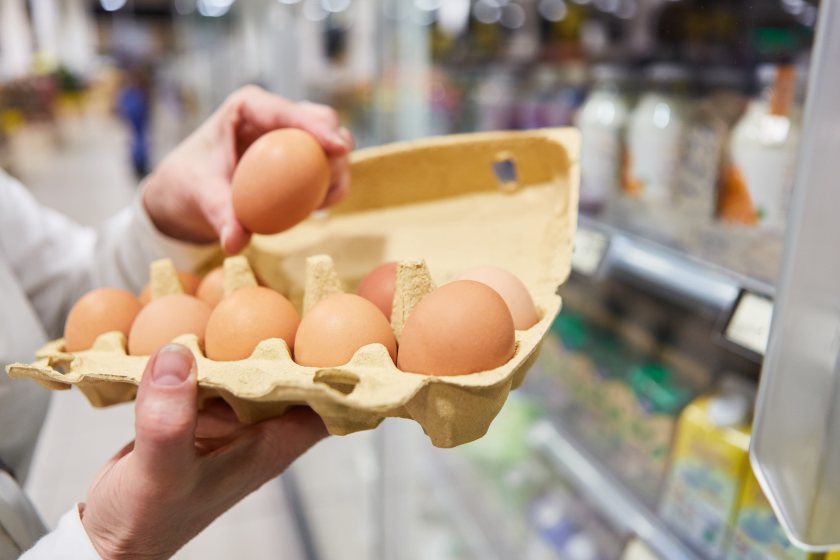
Eggs are expected to be one of the products most affected because they remain a staple grocery item while producers continue facing rising costs linked to feed, pullets, fuel and energy.
James Baxter, egg farmer and chairman of the British Free Range Egg Producers Association (BFREPA), said the organisation had sought “urgent clarification” from government over the proposals.
“We have sought urgent clarification from government on this as we are deeply concerned about the impact on family farms,” he said.
Mr Baxter warned that labour, feed and energy costs continued to rise, while instability involving Iran was adding further pressure to fuel, feed and wider farm inputs.
“Family businesses cannot be expected to carry the cost of keeping consumer shopping prices artificially low,” he said.
Mr Baxter also warned against policies that could remove lower-cost egg production systems from the market.
“The government’s proposed ban would remove colony eggs, which are currently the lowest cost egg production system,” he said.
“Higher welfare systems come with significantly higher production costs, and those costs ultimately affect affordability for consumers.”
He added that alternative approaches should be explored to help maintain affordability while supporting higher welfare standards before “further pressure is placed on family farms”.
Helen Dickinson, chief executive of the BRC, said supermarkets were already competing aggressively to keep prices down for consumers.
“There was already fierce competition between supermarkets,” she said.
She added that retailers were facing rising energy and commodity costs alongside “the soaring cost of the government’s domestic policies”.
The Treasury has not confirmed full details of the proposals but said ministers wanted to help households facing higher living costs.
A spokesperson said: “We want to do more to help keep costs down for families.”
The reported plans follow a similar proposal announced by the Scottish National Party last month, although the SNP’s suggested food price cap in Scotland would not be voluntary.




