




For prime beef eating quality, eliminate autumn–winter growth checks
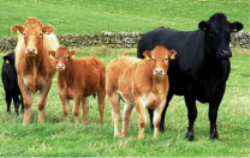
The eating quality of prime suckler beef can be spoiled by autumn–winter growth checks, according to George Brown, procurement officer for Highland Meats. Addressing a workshop at Mr John Bannatyne's Drumalbin Farm, Carmichael, he said that if an animal went through a period of stress, it tended to put down a layer of gristle through the muscle. "Alternatively, if cattle have done well throughout life, it comes through on the plate," he said.
SAC beef specialist Gavin Hill added that avoiding growth checks was also crucial for profitable performance. He said the majority of male cattle in Scotland, for example, used to be sold at over 22 months to receive the second Beef Special Premium.
"To reach that age without being too fat, their growth rate was often held back with reduced feed levels," he said. "Today, farmers know that to maximise profitability, cattle must have their potential realised, which has been achieved on the host farm where cattle are sold at around 16 months old."
A major cause of autumn/winter growth checks tackled at the workshop was pneumonia. Housing specialist Jamie Robertson urged farmers to minimise moisture levels, thereby inhibiting disease organisms which otherwise thrive in damp conditions. He said a dry bed was important at all times, but particularly just after housing and when the weather produced high humidity and low air movement.
Mr Robertson added that two important maintenance jobs were to check roofs and drainpipes so that water was not allowed to flow into or through cattle buildings, and to check the air flow inside for sufficient and draught free ventilation to remove the moisture from animals' breath.
Even in healthy housing, cattle can face a pneumonia threat from four pathogens in particular, according to Bryan Hamilton, livestock development adviser from the workshop sponsor, Pfizer Animal Health. "These are RSV, PI3, BVD and IBR," he said. "These are viruses – against which antibiotics are ineffective – rather than bacteria, so vaccination in conjunction with healthy housing is essential to an effective preventive strategy. For ease of treatment, Rispoval 4 is a four-in-one vaccine against these threats, available from your veterinary surgeon."
According to Jamie Robertson, each outbreak of pneumonia costs about £80 per treated animal on average and possibly another £25 for each calf in its group. Moreover, Pfizer has found research proving that when one animal in a group of calves or growing cattle gets pneumonia, around two-thirds of its apparently unaffected housemates may also suffer lung damage and impaired growth rates.
Evidence comes from the Journal of the American Veterinary Medical Association (JAVMA), which reported a trial that examined the lungs of 469 cattle after slaughter and matched the findings with growth rates. In animals treated for pneumonia, 72% had lesions in the lungs. Among those apparently unaffected and therefore untreated, this figure was only marginally lower at 68%. Compared to animals with undamaged lungs, those with lesions had 6% lower growth rates.
Adopting a holistic approach to cattle health more than paid off, said veterinary surgeon from the Clyde practice Neil Laing. "The money you get back is always more than the cost of preventive measures," he said.
Host farmer John Bannatyne moved out of dairying into beef in 1999 after deciding that "the figures didn't add up". He now runs one of the region's top commercial herds. Having identified his market for finished beef, he concentrates on reliability and consistency of supply 52 weeks of the year.
The majority of herd replacements are home-bred for the 120 spring calvers and 85 autumn calvers, which are mainly three-quarter or seven-eighths Limousin, with some Belgian Blue cows.




