




Fully funded training offered to help upland farms adapt to post-BPS future
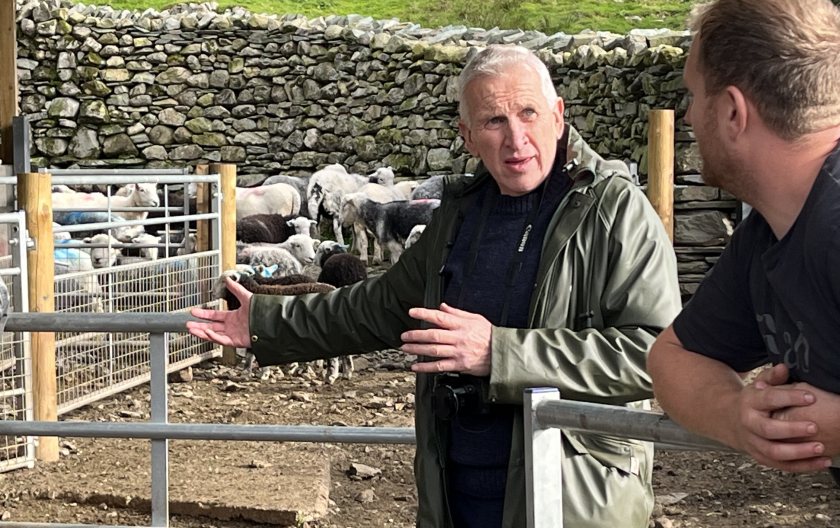
Upland farmers are being offered 12 fully funded training places to help future-proof their businesses, as financial pressures mount following the phase-out of direct payments.
The initiative, backed by H&H Group and delivered in partnership with the University of Cumbria, comes as upland farms adapt to the loss of Basic Payment Scheme income and the rollout of new environmental schemes.
The Farm Business Opportunities course, open to farmers across Cumbria, Northumberland, County Durham and North Yorkshire, will begin on 25 May 2026 and run for four weeks.
It aims to equip participants with practical skills in diversification, sustainable land management and financial planning — areas seen as critical for long-term resilience.
Mark Johnson, chief operating officer at H&H Group, said the scheme reflects the need to support farmers through a period of change.
He said: “We are proud to support this Farm Business Opportunities course in collaboration with the University of Cumbria,” adding that the programme is “a timely and relevant initiative”.
Mr Johnson said the long-term success of agriculture depends on equipping farmers with the skills and confidence to adapt, adding: “In supporting these courses, we are investing directly in the resilience, sustainability and future profitability of upland farm businesses.”
The £550 course fee will be fully covered by H&H, with places limited.
Delivered through the University of Cumbria’s Institute of Science and Environment, the initiative builds on previous short courses focused on Environmental Land Management (ELM).
Participants will study alongside their existing work commitments, combining classroom, online learning and on-farm visits.
These visits will include both a regenerative system and a traditional sheep enterprise that has diversified, offering practical insight into different approaches.
The course will focus on improving financial performance, exploring diversification opportunities and understanding funding linked to environmental schemes.
Attendees will also develop skills in budgeting and scenario planning to support business decision-making.
Highlighting the pressures facing the sector, Kev Bevan, speaking on behalf of the University of Cumbria, said: “The end of the Basic Payment Scheme is a real threat to farm incomes, but I’ve seen firsthand that there are practical ways to respond.”
He added: “With SFI26 opening in June, the timing couldn’t be better.”
Mr Bevan said the course aims to give farmers “the skills, knowledge and confidence to navigate this challenging new landscape”.
Applications are now open, with organisers encouraging farmers to apply early due to limited places.




