




Keep monitoring Wheat Blossom midge as many crops still vulnerable
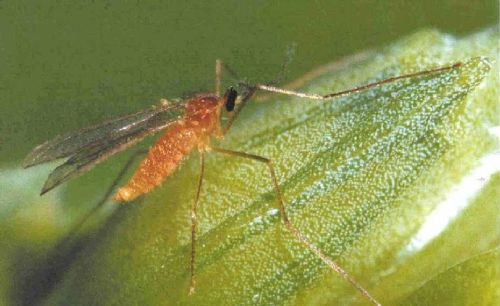
Dow AgroSciences Pestwatch service for Wheat Blossom midge is advising growers to continue monitoring, as many crops are still not beyond the susceptible stage and adult midges are being found in traps.
Sarah Hurry of Dow AgroSciences says that pupation of Wheat Blossom midges has been recorded at five out of eight monitored sites, with a mean percentage pupation rate of 8.6%. "Adult male midges have been caught in pheromone traps in a number of locations. In some instances adult male numbers have exceeded 100 per trap per day. In general adult female midge numbers in crops or on yellow sticky traps have been low, but the recent rain and the period of warm weather are ideal for further pupation, emergence of adults and midge migration."
Sarah points out that the Wheat Blossom midge risk depends on the vulnerable growth stages of the crop coinciding with egg-laying activity. "Wheat crops are susceptible to infestation when they are between ear emerging to ear emerged (GS 51 to 59). Crops at these stages should be assessed for the presence of female midges on still warm evenings. Treatments should be applied as soon as possible after thresholds of midges have been detected."
Treatment thresholds are one adult Orange Wheat Blossom midge per three ears for feed varieties or one adult midge per six ears for milling and seed crops. Growers and advisors can go to http://www.dowagro.com/uk/cereal/pest.htm to monitor midge activity, assess risk and optimize spray timings to ensure effective pest control and to minimize impact on the environment."
Once crops are beyond GS61 they do not required treatment, however, she says.
Sarah Hurry advises that when thresholds are met, growers should apply Dursban WG at 0.6 kg/ha in 200 to 1000 litres of water. "Dursban WG will control all the stages of the pest, giving the grower a wider spray window and more flexibility to control this damaging pest. It gives effective knockdown of adult midges, persistence of 7 to 10 days to control further flights of adults as well as persistence and vapour action to control larvae emerging from eggs laid by the first flight of adults."
"In association with FWAG, Dow AgroSciences recommend a voluntary 12 metre buffer from the edge of the field as part of integrated pest management best practice. Field boundaries act as reservoirs of natural enemies providing shelter and alternative food sources such as pollen and smaller invertebrates. Many species will rapidly recolonise the cereal crop."




