




Low-cost liquid feeds could increase costs of milk production this winter
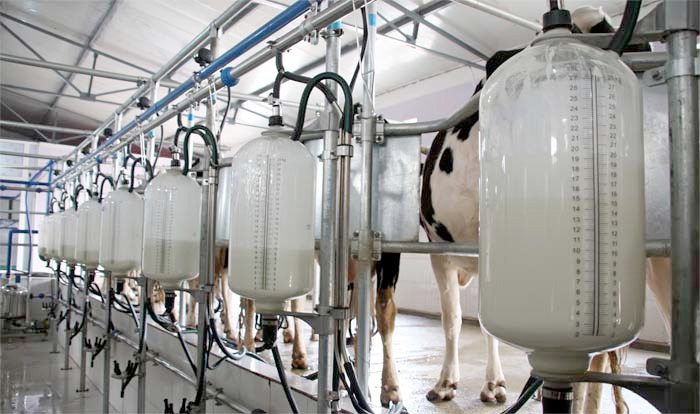
Low-cost liquid feeds used in dairy cow diets this winter are equivalent to using poor quality compounds and could increase the cost of milk production rather than reduce it.
"If ever there was a winter when dairy farmers needed to get the very best return from every penny spent on feeding their cows then this is it,” says Dr Phil Holder of E D and F Man.
“But low-cost liquid co-products are providing cow diets with less fermentable energy - and it can end up costing up to three times more than energy provided by a formulated molasses based liquid feed.”
Dairy farmers are being urged to look carefully at their energy costs as they plan winter diets and to undertake some simple but critical calculations.
“When looking at dry matter, co-products can be as little as 20-25% compared with 65-70% for a molasses based liquid product that has been specifically formulated as an animal feed.”
Co-products are the “left over” products from another process and by their very nature can vary in both analysis and physical nature.
“Although they will have a typical analysis, the actual analysis can often be very different. Molasses based liquid feeds are carefully formulated and will have a guaranteed analysis and declaration covering dry matter, sugar and protein.
"So dairy farmers must ask themselves if they really know what they are buying for their winter diets and do some simple sums before they commit,” adds Dr Holder.
“On cost per unit of protein the formulated high protein liquid feeds are significantly cheaper. A formulated molasses based liquid feed at 30% protein can work out at £6 per unit of protein fed compared with some co-product feeds at 10% protein that end up costing £7 per unit of protein - even though the co-product may be cheaper on a cost per tonne basis.”
Dr Holder says cost effective milk production, rather than chasing extra litres, is the feeding goal this winter.
“Every drop of milk has to be produced as economically as possible from every kilo of silage.
“But trying to cheapen the energy and protein input of the diet will end up costing more, so dairy farmers must do their feed cost calculations very carefully.”




