




May insists UK will leave customs union amid farming industry warnings
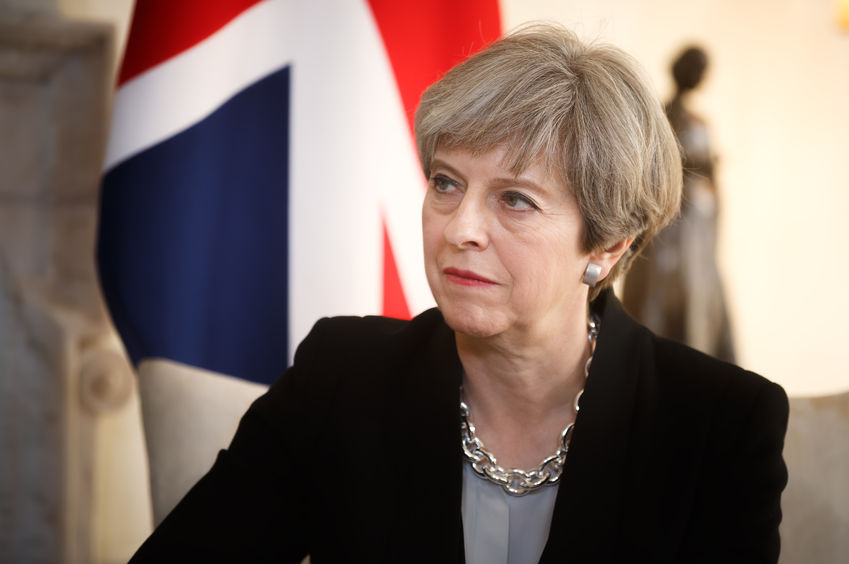
Prime Minister Theresa May has insisted Britain will leave the customs union after Brexit amid warnings from the farming industry.
Ahead of a week of key Brexit meetings with EU negotiators, a Number 10 source said the government are "categorically leaving" the customs union.
It said: “To put this to rest, we are categorically leaving the customs union.
“At home, Brexit is about taking back control of our money, laws and borders. We are going to deliver that, but Brexit is also about the freedom to strike out into the world and sign our own trade deals. We want a good, deep trade deal with the EU and customs arrangement which are as frictionless as possible.”
The EU's customs union helps reduce administrative and financial trade barriers and enhance economic cooperation.
However, they also limit the freedom of their individual members to strike their own trade deals.
The uncertainty of where the Brexit negotiations are heading amid perceived 'hard Brexit' language has prompted the farming industry to call for common sense to prevail.
'Incontrovertible'
The Farmers' Union of Wales has said the evidence supporting the need for the UK to remain in the customs union and the single market after Brexit is "incontrovertible", and that common sense "must prevail."
“Continuing membership of these two institutions is the only way to avoid the dire collapse in incomes predicted in the latest AHDB report and in the FAPRI report in August,” said FUW President Glyn Roberts.
The FUW has in the past demanded Welsh access to the customs union, calling it "critical" for rural Wales.
Stephen James, former NFU Cymru President, said that the only ‘sensible option’ for Brexit negotiators was for the UK to remain a part of the customs union, at least until a time where a comprehensive free trade agreement can be reached.
He said: “In my mind the only sensible option is for us to remain in the Customs Union until such time as a comprehensive free trade agreement is agreed between the EU and the UK.”
'Sticking point'
A briefing paper in the House of Commons Library has warned that agriculture can prove difficult in trade talks.
The authors of the document, 'Brexit: Agriculture and Trade,' said agricultural issues can be a "sticking point" in trade negotiations. It said the interests of consumers and producers need to be balanced.
The paper said: "On leaving the EU customs union, the UK will be able to negotiate its own free trade agreements. This has the potential to open up new markets for UK agriculture."
However, it said: "It remains to be seen how easy these trade negotiations will be. Examples have already been raised where there could be issues such as around the import of hormone-fed beef and chickens washed in chlorine, which are currently banned in the EU."
The farming industry has frequently warned that future trade deals must not allow cheaper food produced to poorer standards to be imported once the UK is out of the customs union.
Poultry industry leaders have said they are "very concerned" about a United States suggestion that the UK will have to accept chlorinated chicken to secure a trans-Atlantic free trade deal.




