




Mountain hare decline report 'flies in the face of what landowners see'
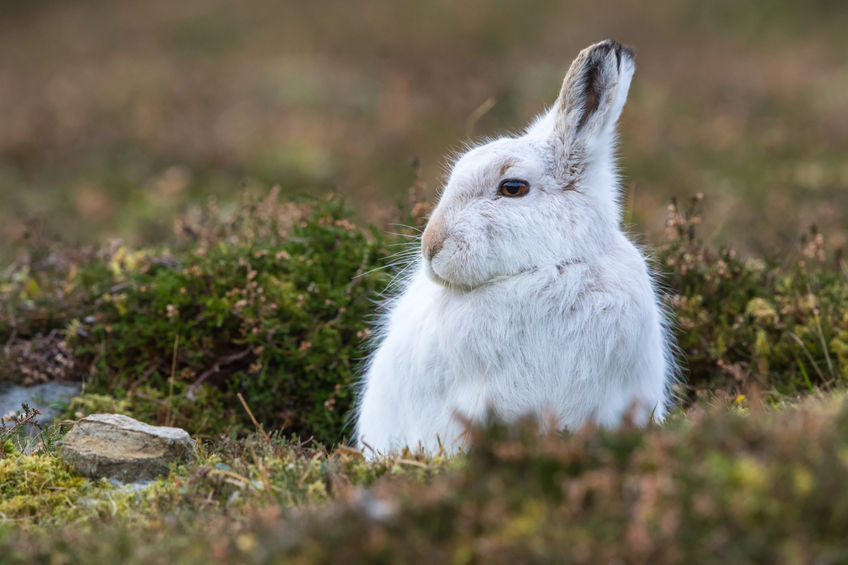
A report which highlights a huge decrease in the number of mountain hares in Scotland "flies in the face" of what farmers and landowners see "everyday".
The Scottish Moorland Group has issued a critical response to an RSPB Scotland report on the decline of the UK's only native hare.
The RSPB report concluded that mountain hare numbers on moorlands in the eastern Highlands have declined to less than one per cent of their initial levels.
It points blame to land use changes, such as the loss of conifer forests to grouse moors.
The study follows a recent review by the Mammal Society which listed the mountain hare as 'Near Threatened'.
But a spokesman for the Scottish Moorland Group said the research is "very much out of kilter" with other research on mountain hares.
"As recently as October 2017 Scottish Natural Heritage reported to the Scottish Parliament that evidence of a national decline in mountain hares since the mid-1990s is not conclusive," the spokesman said.
"This latest research also flies in the face of what estate owners and land managers see every day on the ground - that hare populations are very high.
"We are perplexed that the author of this report did not seek to get data from moorland managers. It should be remembered that mountain hares are only culled when the populations are sufficiently high and culls only control a very small percentage of the population.
The spokesman added: "Culling, which covers a range of activity from shooting for food to habitat protection, is legal and is conducted under a code of practice agreed by the moorland sector."
The Scottish Moorland Group is part of Scottish Land & Estates, a membership organisation for landowners and rural businesses.




