




Nearly 1,000 schools put British farming at the heart of Christmas learning
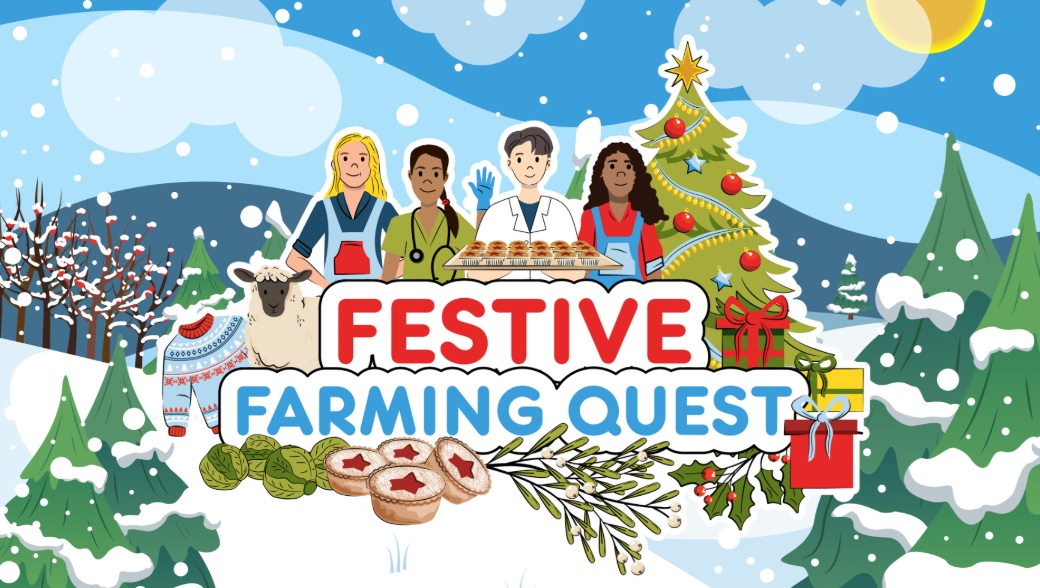
Nearly 1,000 schools have put British farming at the centre of their festive activities this year, as more than 82,000 pupils took part in NFU Education’s first-ever Festive Farming Quest live lessons.
The sessions brought farming into classrooms across England and Wales, giving children a closer look at the people, animals and crops behind their Christmas traditions.
Running from Key Stage 1 to Key Stage 2, the lessons showcased the breadth of British farming at one of its busiest times of the year.
Younger pupils earned ‘festive quest baubles’ as they discovered where Brussels sprouts and Christmas trees originate, and how farmers care for camels and sheep.
Older children took part in a virtual festive “work experience”, exploring what it takes to be a farm vet, how to grow mistletoe, rear turkeys and make award-winning Christmas puddings.
Speakers included young farmer and Farming Student of the Year nominee Coco Jalloh, UK camel dairy founder Daisy Fossett, Glenthorne Vets farm vet Shrea Patel, and Will and Aidan from Matthew Walker Ltd., the world’s oldest Christmas pudding producer.
NFU Vice-president Rachel Hallos said farmers were “proud to play such a central role in our festive traditions”, and that the Quest was “a brilliant way to bring that story into classrooms.”
She noted that teachers and pupils wanted to understand “where their food comes from”, and the live lessons helped them connect directly with the people, animals and crops behind Christmas.
Hallos said the initiative demonstrated “the breadth of British farming” and aimed to inspire young people to appreciate the “care, skill and innovation” involved in producing food to high standards.
She added that meeting farmers, vets and producers helped children see agriculture as part of daily life and ensured “farming has a place at the heart of education.”
Food education has become a growing concern nationally, with calls for stronger teaching on nutrition, sustainability and the UK’s food system across school curricula.
NFU Education’s programmes throughout 2025 have now reached more than half a million pupils, strengthening links between the farming sector and classrooms across the country.




