




New Year cheer for spring barley and beer
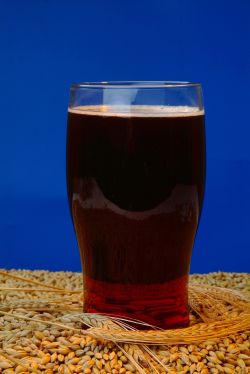
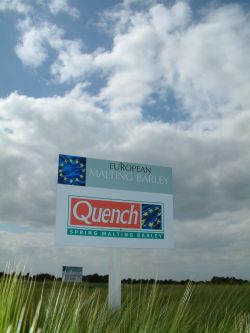
MUCH-IMPROVED grain prices; a leaner and fitter growing and malting industry; and newer high-yielding varieties should all give added cheer to spring malting barley growers. That is the view among industry experts as farmers consider their 2008 spring cropping decisions – and coincides with the farmer launch of a new, high-yielding spring malting variety, Quench.
According to Adrian Dyter, commercial director for leading maltster Greencore Malt, farm prices for spring malting barley have been driven to unprecedented levels during 2007 – in some cases over £200/t. That, in part, has been due to strong feed barley prices driven by the wheat price, he says, but also a very tight worldwide supply and demand balance for malting quality barley, due to poor crops in many key production areas throughout Europe and worldwide.
But while domestic demand for malt for brewing has fallen slightly, the UK brewing industry is still a large consumer, he stresses. Additionally, distilling demand for malt is increasing – due to growing whisky consumption – and malt exports are now at a regular and sustainable level, he says, with UK maltsters in a good position to supply.
"The UK malting industry is regularly consuming 1.75 million tonnes of malting barley, is the third largest producer of malt in Europe and accounts for nearly 10% of worldwide malt production," explains Mr Dyter.
"Demand for malt from the distilling industry is set to increase further. Stocks of spirit are low and if the strong growth we are seeing in markets such as India, China and South America continues, distillers will need to produce more whisky. The additional distilling demand is drawing up malt from England," he adds.
At a global level, Mr Dyter says demand for malt has grown faster than malting plant capacity supply recently. For the future, he predicts continued worldwide growth in demand for malt due to increased consumption of beer.
"It is in all of our interests that the UK is recognised as a good supplier of malt and malting barley."
"For those growers who are well placed because they grow the right quality or are in the right location, or preferably both, malting barley should be part of their long term cropping plans."
Stuart Shand, sales director for Gleadell Agriculture, agrees that the future looks optimistic for malting barley.
The current supply and demand squeeze mirrors the picture in other crops, he says, with shrinking grain stocks and increasing world food demand. "Malting barley availability has decreased by 1 million tonnes since 2000," he points out.
In the UK, while winter malting barley supply has declined, spring malting barley has maintained its position. "It is cheaper to grow for farmers, it spreads workload, it has a better process-ability for customers." Also, new varieties are a step forward, he emphasises. "Most growers still drilling the older varieties should consider newer varieties such as NFC Tipple or Quench."
According to Robert Hiles of leading barley breeder New Farm Crops, the new spring malting barley variety Quench, being made available commercially to farmers for 2008, is rapidly gaining appeal.
Like NFC Tipple before it, he says it is being commercialised and evaluated across Europe – including the UK, Germany, Ireland, France and Denmark, but also in Spain, Poland, Italy, Greece, Hungary, Sweden, Finland, Latvia and even Russia.
"Varieties which are accepted across Europe offer added stability to growers," says Mr Hiles, "by maximising the number of end market opportunities for grain.
"As a variety, Quench has the highest UK treated yield on the new HGCA Recommended List for 2008. On the same list it also has excellent resistance to the major diseases of Rhynchosporium and mildew, as well as stiff straw.
"From harvest 2007, around 5,600 tonnes of Quench are being evaluated by seven different maltsters, which is a significant tonnage. It may be a year or two behind NFC Tipple in terms of its development, but it looks to have a positive future," he predicts.
According to Stuart Shand, the world is currently short of top quality malting barley and he predicts prices will stay firm. Longer term, he believes demand for malting barley looks set to remain.
"The malt market is stabilising and optimism is returning," says Mr Shand, "building a sound base for the future of UK malt and malting barley. Things are a lot more open and there's a greater willingness to cooperate.
"We have strongly recommended NFC Tipple for the last two years. We would recommend it to most spring growers in most situations," he adds.
"It is pan European, suitable for most customers, reaching more markets, which means less financial risk."




