




Patchy oilseed rape needs protection from pests
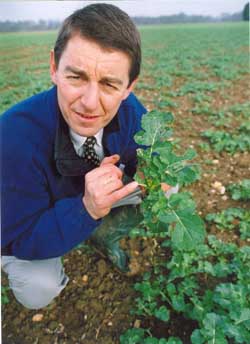
Widespread patchiness in oilseed rape in East Anglia and southern England will make the crop more vulnerable to attacks from pollen beetle and cabbage seed weevil this spring, warns Phil Brown, agronomy manager, BASF.
(Pic shows Phil Brown in a field near Coggleshall, Essex, which is typical of many in the region which failed to establish well in last year's dry autumn.)
"Delayed development means that the patchy areas will reach the vulnerable yellow bud stage just when beetle numbers are building up. Areas with low plant population could get hammered if these pests aren't controlled in good time," Mr Brown says.
His advice is to use a proven long lasting pyrethroid such as Contest, which will provide control throughout the extended bud development stage of patchy crops. "The normal spray threshold is over 15 pollen beetles per plant, but on thin or patchy crops this is reduced to over five per plant because the damage potential is so much greater," he says.
Growers who 'patch' the thin areas with spring oilseed rape as an emergency measure should be doubly vigilant as late flowering plants are much more susceptible, he warns.
And because patchy crops tend to have an extended flowering period, growers could find that cabbage seed weevils enter the parts of the crop that are flowering while the rest of the crop is still at green-to-yellow bud stage – thus creating a mixed population of pests.
"But the main objective must be to control the pollen beetles at green-to-yellow bud stage, and not wait until flowering to evaluate the weevil problem.. If they are needed, two well timed sprays will be more effective than one that fails to control pollen beetle in time," Mr Brown says.




